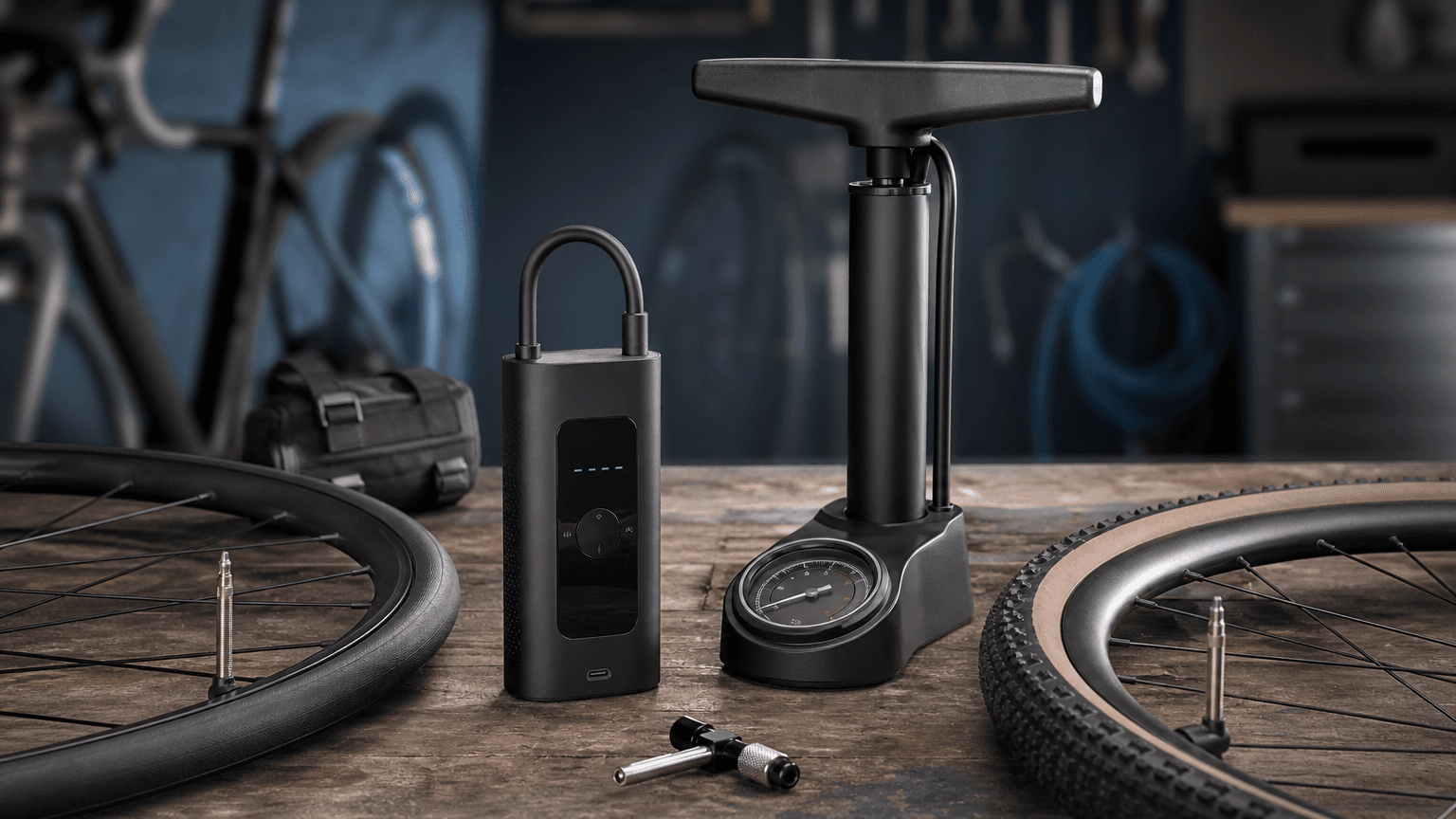
An electric bike pump is a small rechargeable compressor: you set a target pressure, press start, and it stops when it gets there. For UK riders who are tired of mini-pump gymnastics in a lay-by, that is the whole appeal.
This guide covers battery-powered inflators only. It does not include floor pumps, mini hand pumps, or manual tubeless boosters. If you want a home track pump as well, keep one in the garage; the models below are for topping up, puncture recovery, and inflating several bikes before a club run.
Prices below are typical UK ranges in 2026. Stock and discounts move quickly, so use the live pump deals feed rather than treating any figure as a fixed shop price. Cycling Deals UK does not laboratory-test these inflators; recommendations draw on manufacturer specifications, UK retail availability, and published independent reviews.
Quick chooser
Best overall portable: Cycplus AS2 Pro. Compact, digital gauge, auto-stop, typically £70–£90.
Best battery/endurance: Cycplus AS2 Pro Max. Same idea, bigger cell, better for several tyres per charge.
Best budget: Truflo Electron Compact. Often around £40–£50 from UK cycle shops.
Best premium specialist: Fumpa Mini / Mini+. Serviceable design, accurate gauge, typically £80–£115.
Best branded accessory: Muc-Off AirMach Electric Mini Inflator Pro. Easy UK stock, 120 psi, usually £75–£100.
Best pocketable: Flextail Tiny Bike Pump. Small and cheap enough to live in a jersey pocket.
Best home/workshop electric: Cycplus A8. Larger body, higher volume, not a saddlebag pump.
What actually matters on an electric inflator
Auto-stop accuracy. A ±1–2 psi window is fine for road tyres at 70–100 psi. Budget units can overshoot when the battery is low because the motor slows and the cut-off lags. If the last 10% of the charge is doing a 100 psi fill, check the tyre with a separate gauge once.
Battery life is inflations, not milliamp-hours. Manufacturer mAh figures are hard to compare. What you need is how many 700x25c tyres you can take from flat to ~80–100 psi, or how many gravel tyres you can top up from 25 to 40 psi. BikeRadar's 2026 electric-pump testing found that even strong mini inflators get hot after a handful of continuous fills and then need a cool-down.
Heat. These motors are designed for intermittent use. Inflate, rest, inflate. Do not treat a pocket inflator as a compressor for seating stubborn tubeless beads all afternoon.
Valves. Presta and Schrader coverage is the baseline. TPU tubes and plastic valves often need a gentler head or an extension hose so heat does not sit on the valve stem.
Noise. Independent testers regularly record around 80–90 dBA. Fine in a car park; antisocial in a shared hallway at 6am.
Comparison: electric bike pumps UK 2026
Model
Role
Max pressure
Typical UK price
Best for
Cycplus AS2 Pro
Best overall portable
120 psi
£70–£90
Saddlebag / jersey
Cycplus AS2 Pro Max
Best endurance
120 psi
£80–£110
Several bikes per charge
Truflo Electron Compact
Best budget
120 psi
£40–£50
First electric pump
Fumpa Mini / Mini+
Best premium specialist
120 psi
£80–£115
Accuracy and longevity
Muc-Off AirMach Pro
Best branded accessory
120 psi
£75–£100
Easy UK retail stock
Flextail Tiny Bike Pump
Best pocketable
~120 psi
£50–£70
Minimum bulk
Cycplus A8
Best home electric
~150 psi
£45–£70
Garage / van, not a pocket
Garmin does not sell a Charge Cycle Pump in the UK. The Garmin Charge is a power pack for Edge computers, so it is omitted here.
The AS2 Pro is the portable electric pump most UK riders should start with. It is a small alloy cube with a digital display, target-pressure buttons, USB-C charging, and a claimed 120 psi ceiling. Manufacturer figures put a 700x25c tyre at 0–80 psi in around 50 seconds, with enough battery for at least two full high-pressure fills. road.cc's review called out the gauge, auto cut-off and usable battery as the reasons it stays in a tool bottle.
It is slightly larger than the tiniest cubes, and it is noisy, like every pump in this class. Accessories (silicone sleeve, hose, Presta/Schrader compatibility) are part of why it feels finished rather than like a generic gadget.
Why we recommend it
It hits the useful middle: small enough to carry, accurate enough to trust for road pressures, and priced below the premium specialist names.
Pros
Digital gauge and auto-stop, typically ±1 psi claimed
USB-C, fast charge (around 30 minutes on manufacturer figures)
Presta and Schrader without a faffy adapter dance
Strong independent write-ups for a sub-£90 pump
Cons
Gets hot on back-to-back fills
Not silent
UK specialist-shop stock is thinner than Muc-Off; more often Amazon / specialist importers
Best for: Road and gravel riders who want one portable electric they will actually carry.
2. Cycplus AS2 Pro Max — Best battery and endurance
The Pro Max is the AS2 Pro with more cell. BikeRadar's 2026 test logged it as a fast inflator with spare capacity for multi-day riding, typically a little over the standard Pro on UK asking prices (around £85–£110). If you inflate two bikes plus a spare, or you bikepack and dislike hunting for USB-C at cafés, this is the version that makes sense.
It is physically larger than the Pro. If your only use is a single road bike and the occasional top-up, save the money and buy the Pro.
Why we recommend it
Endurance is the one spec you cannot fake on a Sunday morning when three mates have gone flat overnight.
Pros
More inflations per charge than the standard Pro
Same 120 psi class and digital auto-stop workflow
Sensible upgrade, not a different product family
Cons
Bigger and heavier than the Pro
Diminishing returns if you only ever fill one tyre
Same heat and noise caveats as other mini compressors
Best for: Club runs, households with several bikes, bikepacking.
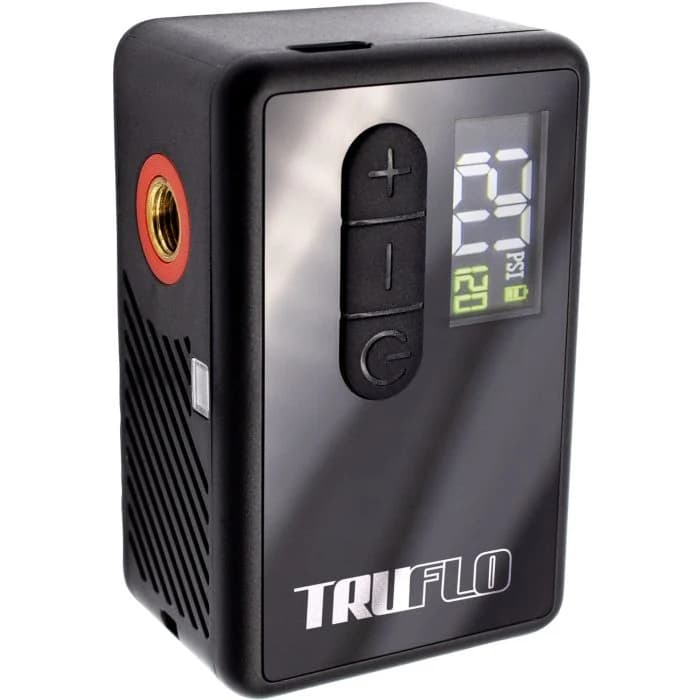
Truflo (Madison) is the budget pick you can actually buy from a UK bike shop. Tweeks and similar retailers typically list the Electron Compact around £40–£50 (RRP nearer £50). You still get a digital display, claimed ±1 psi control, 120 psi max, USB-C, and tubeless-friendly output, plus a small LED.
Build quality is a step down from Fumpa or Muc-Off, and it is not the quietest. For a first electric pump, that is an acceptable trade.
Why we recommend it
It includes the features that matter (gauge, auto-stop, dual valves) at a price that does not sting if it lives in a saddlebag and gets knocked about.
Pros
Often the cheapest bike-specific electric inflator in proper UK shops
120 psi is enough for road tyres
USB-C and a readable display
Cons
Noisier, less refined casing
Battery stamina behind the Cycplus Pro Max
Fewer published long-term reviews than Cycplus or Fumpa
Best for: Riders stepping off CO2 cartridges without spending £90.
Fumpa (Thumper / Fumpa Pumps) is the specialist name that popularised compact electric inflators. The Mini and current Mini+ sit in the middle of the range: 120 psi, a few full inflations per charge, USB-C, and on the Mini+ an OLED gauge with tyre-pressure presets and an auto-zeroing sensor. Typical UK prices run £80–£115 depending on version and colour.
They are handmade in Melbourne and sold through a UK site and selected shops, so you are paying for a serviceable design (replaceable battery packs, calibration) rather than a disposable gadget. That is the point of the premium.
Why we recommend it
If you want an inflator you can keep running for years, Fumpa's owner-serviceable approach is the grown-up option.
5. Muc-Off AirMach Electric Mini Inflator Pro — Best branded accessory
Muc-Off's AirMach Pro is the easy UK-retail answer. Tredz has been listing it around £75 against a £100 RRP. You get a 120 psi brushless mini inflator, LED pressure and battery display, USB-C in about 30 minutes, and Presta / Schrader / big-bore compatibility with a built-in Schrader adapter. Weight is about 122 g without the silicone sleeve.
The standard (non-Pro) AirMach tops out at 100 psi, which is tight for some road setups; the Pro is the one to buy. BikeRadar found it powerful and well-accessorised, with noise and head-seating care as the main caveats.
Why we recommend it
Warranty, returns, and click-and-collect matter. Muc-Off is on every UK shop wall.
Pros
Proper UK distribution (Tredz, Merlin, Halfords)
120 psi and a real display on the Pro
Fast USB-C charge
Regular discounts below £80
Cons
Noisier than some rivals in group tests
Valve head needs a firm seat
Standard non-Pro model is 100 psi only — check the listing
Best for: Buyers who want a known brand from a UK bike retailer.
Flextail's Tiny Bike Pump (and the Pro variant BikeRadar used as its 2026 budget pick at about £58) is the one that disappears in a pocket. You still get a gauge, USB-C, and enough punch for clinchers and already-seated tubeless tyres. Accuracy in that test was competitive with dearer cubes; the consistent complaint is noise.
If you already carry a bulky multi-tool and a tube, this is the electric pump that does not force a bigger saddlebag.
Why we recommend it
The best pump is the one you have with you. This one is small enough that you might.
Pros
Genuinely pocketable
Strong value in independent tests
Quick USB-C top-ups
Cons
Loud
Less battery headroom than Pro Max / Fumpa
Easier to find online than in every local shop
Best for: Minimalist road kits and summer jersey-pocket riding.
The A8 is a larger handheld compressor, not a cube. Manufacturer listings put it around 150 psi with a hose, dual valves, and extra nozzles for balls and toys. Typical street prices sit near £45–£70. It is the right shape for a garage shelf, camper van, or the boot of the car — not for a saddlebag.
Use it for pre-ride fills and family bikes. For tubeless bead seating, a dedicated booster or compressor is still more reliable than any portable electric, A8 included.
Why we recommend it
If your "electric pump" lives at home, buying a tiny 120 g cube is missing the point. Volume and a hose make household use less fiddly.
Pros
Higher pressure headroom than most mini cubes
Hose is kinder to TPU valves
Cheap for a home electric inflator
Cons
Too big to carry on the bike
Plastic-bodied compared with Fumpa's alloy Mini
Not a substitute for a high-quality floor pump gauge if you are obsessive about 1 psi
Keep both if you can. A floor pump does not overheat, does not need charging, and a decent digital track pump is still the calmest way to set pressures before a 6am start. The electric mini pump wins roadside, at the car, and when you would rather not take a track pump to a sportive car park.
Portable electrics are weak at initial tubeless bead seating. They deliver a steady stream, not a dump of volume. Once the bead is seated, they are excellent for topping up sealant-sloshing gravel tyres at 30–45 psi.
Buying checklist
Confirm it is a battery inflator, not a mini hand pump with a similar name (AirMach Mini hand pump is a different product).
If you run 80 psi+ road tyres, skip 100 psi-max gadgets; buy 120 psi class.
Prefer USB-C and a display. Blind inflators are how you toast TPU tubes.
Budget £40–£50 for Truflo, £70–£90 for AS2 Pro / Muc-Off Pro, £80–£115 for Fumpa Mini+.
Will an electric mini pump replace my floor pump? For pre-ride fills on one or two bikes, yes. For weekly household use and tubeless setup, keep a floor pump.
Can they seat tubeless beads? Sometimes on a well-matched tyre and rim. Do not rely on it. Use a booster or compressor for first seating.
How accurate are the gauges? Mid-range cubes are typically within a couple of psi at road pressures in independent tests. Verify a new pump against a trusted gauge once.
How many tyres per charge? Two full high-pressure road fills is a realistic planning number for compact units. Gravel top-ups go further. Pro Max and Fumpa stretch that.
Are they allowed in aircraft cabins? Most lithium mini inflators are small enough, but airline rules vary. Check watt-hours and your carrier. Fumpa markets some models as air-travel friendly; still confirm before you fly.
Why not the Silca Tattico or Topeak JoeBlow Booster? The Tattico is a hand pump. The JoeBlow Booster is a manual floor booster. Neither belongs in an electric-only list.
Browse electric pump deals
Cycling Deals UK hand-checks offers from UK retailers and shows sale price against the listed original. Browse bike pump deals, or see everything live on the deals feed. More buying advice lives in all guides.
Electric pumps versus CO2
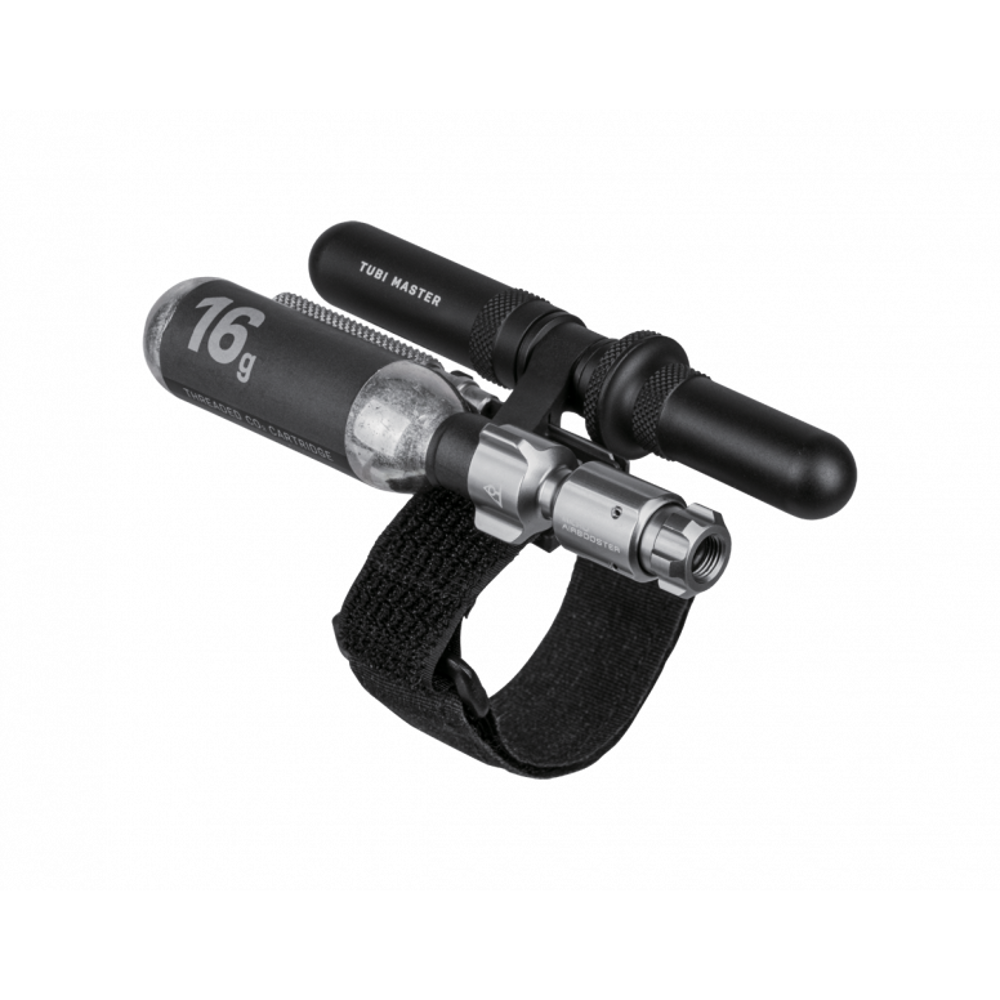
CO2 cartridges are still lighter than any electric cube. They are also single-use, messy in the cold, and useless for a 10 psi top-up before a climb. An electric inflator earns its keep the third time you would have bought a box of 16 g threads. Carry a tube and tyre levers either way; the pump does not fix a lacerated tyre.
Charge overnight before a sportive. Lithium cells sag in a frost, so a pump that did two tyres in July may only finish one in January. If you rely on it as your only inflator, a small backup — a 16 g CO2 or a tiny hand pump — is still sensible on a remote loop.
Care and common mistakes
Do not store the unit compressed against a valve in a hot car. Wipe grit out of the head; a grain of road dirt is how Presta cores leak after a successful fill. Recheck pressure after the tyre cools. If you run TPU tubes, use the extension hose and keep bursts short so the stem does not melt.
Generic car inflators from marketplaces often quote 150 psi and miss the auto-stop accuracy cyclists need. Stick to bike-specific heads if you care about 70-90 psi road tyres.