In 2026, £1500 is a genuine performance threshold for UK road buyers. Below it, you're typically getting an alloy endurance frame or an entry-level carbon build with 2x gearing and (increasingly) hydraulic disc brakes. Above it, the gains become incremental unless you're spending meaningfully more. Getting this budget right means understanding three things: which groupset tier actually changes how you ride, which spec compromises are acceptable, and how to confirm a "sale" price is genuinely what it claims to be.
This guide covers all three in full. By the end, you'll know exactly what to look for on a spec sheet, which brands consistently over-deliver at this price, and how to verify every discount before you buy.
What £1500 actually gets you in 2026
At this price point in the UK market, most bikes fall into one of two categories:
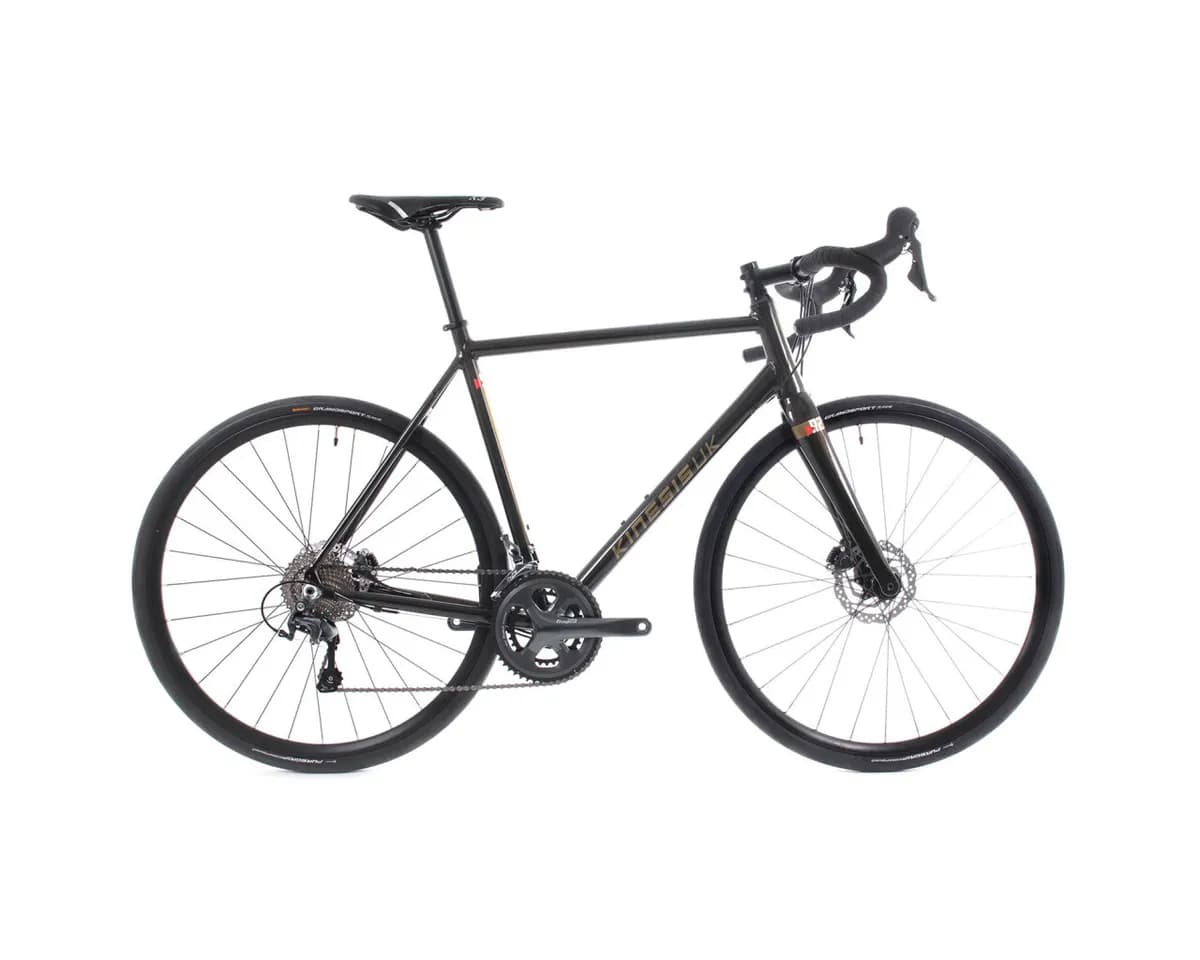
Alloy endurance builds (the majority of the market): 6061 aluminium frame, carbon or alloy fork, hydraulic disc brakes, and a drivetrain in the Shimano Tiagra or lower 105 territory. These are versatile, durable, and often spec well on tyre clearance.
Discounted entry carbon builds: A carbon frame that originally retailed at £1800-£2200 and is now on sale. The value can be real, but the spec package tends to be where corners were cut to hit the original price point.
The shift that's changed the sub-£1500 market most in recent years is hydraulic disc brakes becoming standard rather than premium. If you're looking at a bike in this range with mechanical rim brakes or cable-operated disc brakes, the saving elsewhere needs to be substantial to justify it.
A reasonable scoring approach for any sub-£1500 bike:
| Spec area | Minimum acceptable | Better |
|---|---|---|
| Groupset | Shimano Claris (8-speed) | Tiagra (10-speed) or 105 |
| Brakes | Mechanical disc | Hydraulic disc |
| Tyre clearance | 28mm | 30-32mm (confirmed, not claimed) |
| Wheels | Box-section alloy | Double-walled, tubeless-ready |
| Geometry | Race | Endurance (for most buyers) |
Browse current road bike deals for racing, sportives and endurance to see what's available at this price across UK retailers right now.
What features actually matter at this price (and what doesn't)
The braking system matters more than the groupset number
It's common for buyers to fixate on the groupset name while ignoring the braking setup. At £1500, the difference between hydraulic disc and mechanical disc brakes is far more noticeable day-to-day than the difference between Tiagra and 105 shifting. Hydraulic discs give you consistent, modulated stopping in all conditions with minimal lever effort. In a UK winter, that's not a minor upgrade. It's practical.
If the spec sheet says "mechanical disc brakes" and the price feels suspiciously good, it often reflects exactly this trade-off.
Frame material: what you actually gain from entry carbon at this budget
An alloy frame at £1500 will typically be lighter and stiffer than alloy frames of ten years ago. A discounted entry carbon frame bought at this price point usually offers a slightly smoother ride feel and a modest weight saving, but the carbon layup is unlikely to be sophisticated. What you genuinely gain is vibration damping at the chainstays and seatstays, which matters on rougher UK roads.
What you don't gain at entry-level carbon is a higher upgrade ceiling. The frame's tyre clearance limits, brake standard, and dropout spec are fixed. Check those before assuming "carbon" means better long-term.
Tyre clearance: don't trust the marketing number
"Clears up to 30mm" on a spec sheet frequently means 28mm is the practical limit once you account for tyre swell and frame tolerances. Bikes genuinely capable of running 32mm tyres will usually confirm it in the technical geometry chart or in a detailed spec list. That extra clearance matters for year-round UK riding and changes the handling character at higher speeds on rough surfaces.
The road tyres deals section gives a good sense of what tyres you can actually spec up to in 25c, 28c, and 32c widths.
Wheels: where the real compromises hide
Entry-level complete bikes routinely use wheel builds that are entirely functional but nowhere near their best on stiffness or rolling resistance. Two things to check: are the rims tubeless-ready, and what's the spoke count? A 24-spoke front wheel on a heavier rider, for example, is less durable than a 28-spoke equivalent. You can upgrade wheels later (more on that below), but knowing you'll need to plan for it is useful.
Geometry: endurance vs race fit
Most buyers at this price benefit from an endurance geometry: a taller stack, a shorter reach, and a more upright position that reduces strain on the lower back and neck over two-plus hours. Race geometry asks more of your flexibility and core strength. If you're using the bike for sportives, commuting, or building fitness rather than chasing KOMs on short club rides, endurance geometry is the right call.
Check the geometry chart for stack and reach values. A stack of 560mm-580mm on a size medium is a reliable indicator of endurance positioning.
Groupsets under £1500: Claris vs Tiagra vs 105
Cyclist.co.uk's 2026 groupset guide (updated February 2026) provides a clear hierarchy of Shimano's road range. At sub-£1500, you're realistically looking at three tiers:
Shimano Claris (8-speed)
Claris is the entry point of Shimano's road range. The 8-speed drivetrain works reliably, and for a first road bike ridden mainly solo, it's acceptable. The trade-offs are real though: fewer gears means larger jumps between ratios, which you notice on rolling terrain. Long-term, many riders find Claris limiting and want to upgrade within 12-18 months.
A Claris road bike is worth considering if your budget is closer to £700-£900 and you're prioritising frame quality or hydraulic brakes over drivetrain spec. At £1500, there's usually a better option.
Shimano Tiagra (10-speed): the value sweet spot
Tiagra is where most buyers at this budget should be targeting. It's a 10-speed groupset with closer gear ratios than Claris, smoother lever action, and fully compatible with hydraulic disc braking when spec'd as such. The shift quality is noticeably better than Claris in regular use, and the drivetrain is durable enough that most riders won't feel the need to upgrade it.
A Tiagra hydraulic disc road bike at £1200-£1500 represents genuine value in 2026. Road.cc's buyers' guide (updated June 2026) specifically notes how well Tiagra performs in this value band when paired with a well-spec'd frame.
Shimano 105: punching above weight
105 (currently in R7100 12-speed form, or the outgoing R7000 11-speed) is the first groupset in Shimano's range that most riders would describe as having a truly premium feel. Closer ratios, crisper shifts, better long-term durability. If you find a 105-equipped bike at or below £1500 because it's been discounted from a higher original price, buy it. That's a genuine deal.
Shimano 105 Di2 (electronic) will rarely sit at £1500 new. When it does appear discounted, the savings need scrutiny: verify the "was" price carefully using the checklist below.
A simple decision matrix:
- "I want the best shifting under £1500": target Tiagra or 105 mechanical with hydraulic discs
- "Budget is the priority and I understand the trade-off": Claris is acceptable, expect an upgrade desire within 2 years
- "I want electronic shifting under £1500": check whether Di2 105 appears on the Cycling Deals UK deals feed at a verified discount, but don't expect it to be common
Upgrade path after purchase
The most cost-effective upgrades after buying a well-spec'd Tiagra or 105 bike, in rough priority order:
- Tyres (cheapest, biggest performance gain per pound spent)
- Bar tape and saddle (fit and comfort)
- Pedals (if the bike ships with toe clips or no pedals)
- Wheels (later, when budget allows and the stock set is the limit)
Don't swap the groupset if you've already targeted Tiagra or 105. The money is better spent on rolling stock. Check discounted wheel and tyre options to plan ahead.
Which brands punch above their weight at this price
The pattern across UK retail at this price is consistent: the groupset tier and braking spec are roughly equal across comparable models from the major brands, so the real differentiator is what comes with it.
Canyon (direct-to-consumer) tends to offer a higher spec per pound than traditional retail brands, because they cut the dealer margin. A Canyon Endurace at this price has historically featured better tyre clearance and a more composed geometry than comparably-priced models from other brands. The watch-out: sizing assistance is online-only, so getting your fit right before ordering matters.
Giant builds its own frames and wheels, and the TCR and Contend ranges at this price usually benefit from that vertical integration: the wheel builds are often better than brand-name alternatives at the same price. Watch for model-year carryover pricing, where a 2024 model is sold alongside a 2026 at a nominally similar price.
Specialized (Allez, Tarmac SL7 Sport when discounted) brings strong frame engineering to this price. The alloy Allez is one of the few bikes at sub-£1500 that genuinely rides like something more expensive. The watch-out: stock Specialized wheelsets at this price are functional but rarely inspiring, so budget for a tyre upgrade early.
Trek (Domane AL, Émonda AL) suits buyers prioritising endurance geometry and UK dealer support. Trek's IsoSpeed decoupler on the Domane adds measurable compliance. Watch for spec sheets where hydraulic brakes are on some sizes but not others within the same model line.
Cannondale, Orbea, Boardman, and Bianchi entry-level all have models worth considering when they land at genuine discounts. The Cannondale Synapse disc is a strong endurance option when discounted into this range. Orbea's Orca range is worth examining for carbon options at the upper end of £1500.
The key principle: brand matters less than the complete spec package. Two bikes with the same Tiagra groupset can have meaningfully different wheels, clearances, and geometry. Read the full spec sheet.