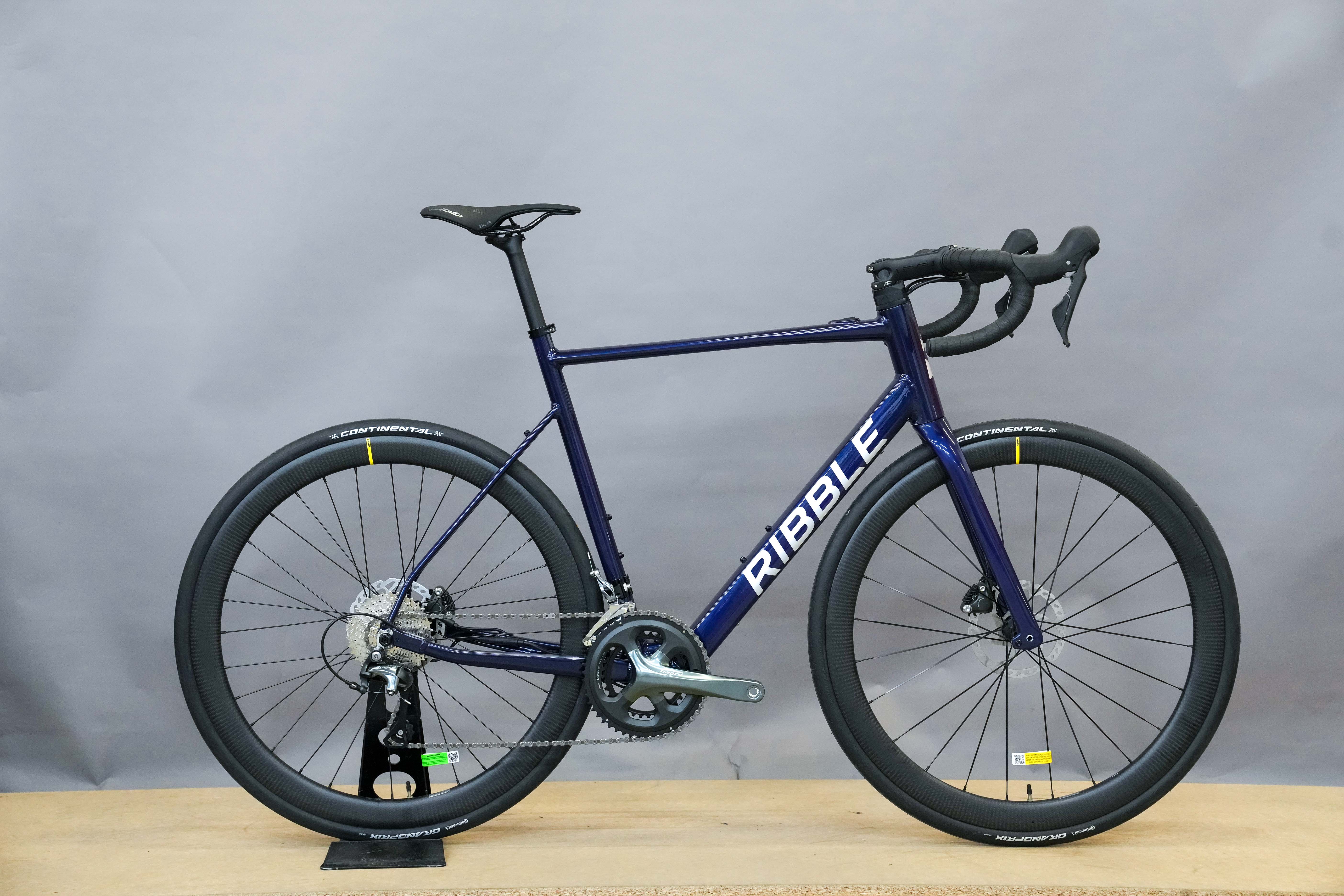
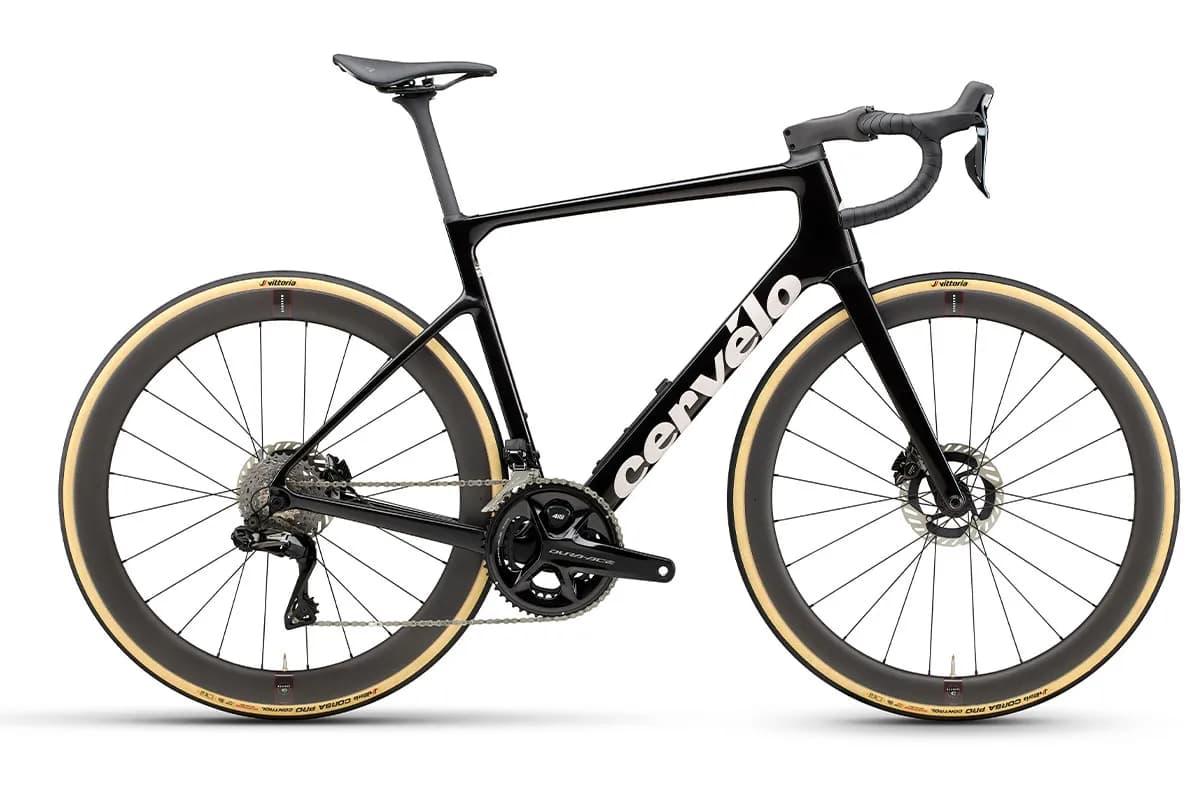
Endurance road bikes by budget and use case
There's no single best endurance road bike, the right choice depends on your budget, how hilly your target route is, and how much comfort you're willing to trade against outright speed. Here's how to think across the main tiers.
Under £1,000, the accessible sportive starter
At this price you're typically looking at aluminium frames with Shimano Claris or Sora groupsets. Don't dismiss this category. A well-specced aluminium endurance frame with 30mm tyre clearance and a Sora 9-speed compact setup will complete a century comfortably. The compromises are weight (typically 10–11 kg) and component durability over multi-year hard use.
Key specs to check: maximum tyre clearance (target 30mm minimum), whether the fork accepts a mudguard, and whether the cassette goes to at least 32T for hilly rides.
The road bikes under £1,000 deals page on Cycling Deals UK lists current discounted options filtered from UK retailers, useful for spotting clearance models that punch above their original price point.
£1,000–£1,500, the sweet spot for most sportive riders
Shimano 105 (or equivalent SRAM Rival) at this price range is a significant jump. Shifting precision improves, cassette options widen (11–34 is common), and frames start appearing in aluminium with carbon forks or entry-level carbon. Tyre clearances here are often 32–35mm, and mudguard compatibility is more common.
This is where the best value endurance builds tend to cluster. Check road bikes under £1,500 for current retailer offers with savings clearly displayed.
£1,500–£2,500, carbon frames and wider gearing
Carbon frames below £2,000 now deliver genuinely capable long-distance machines. At this level you'll find bikes specced with Shimano 105 Di2 or Ultegra mechanical, tyre clearances up to 35–38mm, and geometry charts that are genuinely measured and published. Weight drops to 8.5–9.5 kg for a well-specced build.
Canyon's own guidance (April 2026) confirms that typical tyre clearances on endurance-focused road bikes are "usually over 30mm and can reach as much as 38mm", which matters enormously for UK roads.
For deals in this range, the endurance road bike deals page aggregates hand-checked discounts from retailers including Sigma Sports, Merlin Cycles and Tredz.
£2,500+, premium builds with serious gearing range
Above this threshold you're looking at top-tier carbon layups, electronic groupsets, and frames designed specifically around endurance compliance. Trek's Domane, Giant's Defy, Specialized's Roubaix and Cannondale's Synapse all live here in their upper variants. The real benefit isn't just weight, it's frame compliance technology (Trek's IsoSpeed, Specialized's Future Shock) that absorbs road buzz at the frame level rather than relying solely on tyre volume.
Century setup checklist: the bike is only half the equation
Getting the bike right is the start. What you bolt on, and how you set it up, determines whether you're comfortable at mile 80 or suffering through it.
Tyres and pressure
Wider tyres at lower pressure absorb more road vibration. Alpkit's 2026 endurance buying guide explains that running wider tyres at lower pressures produces a smoother ride on rougher surfaces, which is the consistent reality on UK B-roads and country lanes.
The practical targets for most endurance road bikes:
- 700×28c: minimum for UK tarmac comfort; still fast, but you'll feel the rough stuff
- 700×30c: the all-round sweet spot, noticeably smoother without meaningful rolling resistance penalty
- 700×32c: the comfort upgrade for rougher routes, older road surfaces and longer days
Cycling UK's tyre size guide documents these sizes (700×28c, 700×30c, 700×32c using the 622mm bead seat diameter) as the standard road sizing range. What matters practically: check your frame's maximum tyre clearance before buying wider rubber, and measure real clearance after fitting (tyre swell means a "32mm" tyre often measures 33–34mm).
For current deals on road tyres, Cycling Deals UK tracks discounts across the major tyre brands stocked by UK retailers.
Gearing
A compact chainset (50/34T) with an 11–34 cassette gives you a low gear of 34×34, low enough for sustained 10–15% gradients without your cadence collapsing. A sub-compact chainset (48/31T or 46/30T) paired with an 11–36 cassette takes this further and suits riders targeting hilly sportives like the Fred Whitton, Marmot or Dragon Ride.
The principle: gearing that feels slightly too easy at the start of a century will feel exactly right at mile 90. Resist the temptation to run a race cassette (11–28) for a long, hilly UK ride, the top speeds it provides are rarely useful, and the absence of an easy gear is punishing when you're tired and facing a late climb.
Browse discounted cassette deals and chainsets on Cycling Deals UK before committing to a full groupset upgrade.
Contact points: saddle, bars, stem
Three contact points determine upper body comfort on long rides: the saddle, the handlebar, and the stem. None of these can be fully substituted by bike geometry alone.
- The saddle should match your sit bone width, width measurement services are free at most independent bike shops
- A shorter stem (80–90mm vs 110mm) reduces effective reach and brings the bars closer when you're feeling stretched
- Bar width should roughly match shoulder width; going too wide increases fatigue in the shoulders
Cycling Deals UK tracks discounted saddles from UK retailers if your current saddle is causing discomfort on long rides.
Geometry for long distance: stack, reach and what they actually mean
Stack and reach are the two numbers that most reliably describe your position on a road bike. Canyon's geometry guide (October 2022) defines them precisely: stack is the vertical height from the bottom bracket to the top of the head tube; reach is the horizontal distance between the same two points.
In plain terms:
- Higher stack raises the handlebars relative to the saddle, reducing strain on the lower back, neck and shoulders (per Alpkit's 2026 endurance guide). Endurance bikes have more stack than race bikes in equivalent sizes.
- Shorter reach means you don't have to stretch as far forward to hold the bars. Combined with a higher stack, it produces the characteristic "upright but efficient" position of endurance platforms.
BikeRadar's geometry explainer notes that a typical race bike seat tube angle sits around 73 degrees, placing you directly over the pedals for power transfer. Endurance bikes often use a slightly slacker angle to improve comfort on long efforts.
A practical rule: if two bikes have the same frame size but different stack/reach figures, the one with more stack and less reach will be measurably more comfortable on a 100-mile ride, all else being equal. When assessing bikes, look for the geometry chart (not just the marketing copy) and compare stack/reach directly.
Tyre clearance: the number that limits everything else
Tyre clearance is the single most limiting spec on a road bike for UK use. Once you've bought the frame, you cannot exceed the maximum tyre size the frame and fork allow. This makes it the right place to start when assessing any endurance bike.
Canyon's April 2026 guidance puts the typical range at over 30mm up to 38mm for endurance road bikes. Some "all-road" variants extend this to 40mm+.
Compatibility checklist before buying:
- Check the frame's maximum tyre clearance in the geometry chart, not just the marketing spec
- Check the fork clearance separately (front and rear can differ)
- Account for rim width: a wider rim inflates actual tyre width beyond the stated size
- After fitting, verify there's at least 3–4mm clearance between the tyre and the frame/fork at the tightest point
- If you want mudguard compatibility, check for mudguard eyelets and that there's clearance with the guard fitted over your chosen tyre
Many endurance road frames marketed as "clears up to 32mm" practically fit 30mm comfortably and 32mm with minimal margin. Read full reviews and owner reports rather than relying solely on manufacturer claims. The guide to road bikes under £1,000 on this site includes specific notes on real-world tyre clearance in this area.
Gearing for UK climbs: choosing the right range
The climbs in UK sportives aren't always long Alpine switchbacks, they're often short, steep, and delivered in multiples with no recovery time between them. Think Hardknott and Wrynose in the Fred Whitton (gradients briefly exceeding 30%), the punchy climbs of the Tour of Cambridgeshire's hillier variants, or the rolling South Downs in an autumn sportive.
Choosing your gearing by ride profile:
| Ride type | Chainset | Cassette | Notes |
|---|
| Flat/rolling (East Anglia, Kent) | 50/34 compact | 11–28 or 11–30 | Speed range is ample; the 34T inner covers any surprise hills |
| Hilly UK sportives (Cotswolds, Yorkshire Dales) | 50/34 compact | 11–32 or 11–34 | 34×34 = manageable on sustained gradients |
| Steep/mountainous (Lakes, Wales, Highlands) | 48/31 sub-compact | 11–34 or 11–36 | Priority is survival on the final climbs when fatigued |
A note worth stating plainly: the gearing that feels unnecessary at mile 10 is exactly what you'll want at mile 85. Over-gearing a long ride is one of the most common errors among riders moving up from shorter routes. A compact paired with a wide-range cassette adds minimal weight and costs nothing in top-end speed on descents.
How to find the best deals on endurance road bikes
Cycling Deals UK operates as a hand-checked aggregator of discounts from UK cycling retailers. Every listing shows the original price, the current sale price, the percentage saving, and the retailer, so you can compare across shops without visiting them individually.
The deal-matching process for endurance bikes:
- Start at the endurance road bike deals or best road bike deals pages
- Filter or sort by discount to find the deepest reductions on current stock
- For each deal, check the spec: maximum tyre clearance, cassette range (look for 32T minimum for hilly routes), and whether it's disc or rim brake
- Cross-reference the geometry chart on the manufacturer's site before buying
What to watch for in road bike deals:
- Rim vs disc variants at the same model name, they can have different tyre clearances
- Previous-generation groupsets (e.g., 11-speed vs 12-speed Shimano) affect cassette availability going forward
- "Clears 32mm" in marketing vs the actual geometry chart, always verify
- Size availability: sale bikes often have limited sizes remaining; check this before getting attached to a specific deal
For discount-first browsing, head to road bikes deals for the full live feed from UK retailers including Sigma Sports, Merlin Cycles, Tredz and Balfe's Bikes.
Browse discounted endurance road bikes on Cycling Deals UK
Endurance road bike quick comparison (sportive and century use)
| Budget band | Tyre clearance (typical) | Gearing to look for | Best for | Key check |
|---|
| Under £1,000 | 28–30mm | Compact 50/34 + 11–32 | First sportive, charity century | Mudguard eyelets, real tyre clearance |
| £1,000–£1,500 | 30–32mm | Compact 50/34 + 11–34 | Regular sportive rider | Disc vs rim, 105-level groupset |
| £1,500–£2,500 | 32–35mm | Compact/sub-compact + 11–34 or 11–36 | Hilly UK sportives, repeat centuries | Carbon frame compliance, geometry chart |
| £2,500+ | 35–38mm | Sub-compact or electronic with wide range | Fred Whitton, Dragon Ride, audax | Frame compliance tech, fit geometry |
Frequently asked questions
What is stack and reach, and why does it affect comfort on a century? Stack is the vertical distance from the bottom bracket to the top of the head tube; reach is the horizontal distance between the same two points (Canyon, 2022). A higher stack and shorter reach produces a more upright riding position, which reduces strain on the lower back, neck and shoulders over long distances (Alpkit, 2026). On a century, these differences accumulate significantly, two hours of subtle neck tension becomes acute discomfort by hour five.
How wide a tyre can an endurance road bike typically fit? Canyon's April 2026 guidance puts the typical range at over 30mm up to 38mm for endurance road bikes. Always verify using the frame's geometry chart, not the marketing copy, and check fork clearance separately.
Is an endurance road bike slower than a race bike? Marginally, in optimal conditions on smooth tarmac. The real-world gap is smaller than most riders expect, wider tyres at correct pressure do not meaningfully increase rolling resistance, and the comfort benefit often produces better sustained power output over long rides. On rough UK tarmac, a 30mm tyre at 70 psi can outperform a 25mm tyre at 90 psi in both comfort and speed.
What gearing should I run for UK sportives? For most hilly UK sportives, a compact chainset (50/34) with an 11–34 cassette covers the full range adequately. For mountainous routes (Fred Whitton, Dragon Ride), a sub-compact with an 11–36 cassette is worth the minor added weight. The lower end of the range matters far more than the top end on an all-day ride.
What should I prioritise if I get numb hands or neck strain on long rides? Both symptoms point to too much weight forward on the hands, typically caused by a reach that's too long, a stack that's too low, or both. Start by checking the stem length (shorter is more comfortable) and bar height (spacers under the stem raise the front end). A bike fit assessment from a qualified fitter is worthwhile if symptoms persist across multiple rides.
Can I run 30mm or 32mm tyres on my road bike? Only if your frame and fork clear them. Check the maximum tyre clearance in the geometry chart (not the marketing spec), account for tyre swell (a "32mm" tyre often measures 33–34mm when inflated on a rim), and ensure at least 3–4mm clearance at the tightest point. If in doubt, the best road bike under £1,500 guide includes specific notes on which bikes genuinely accept wider rubber.