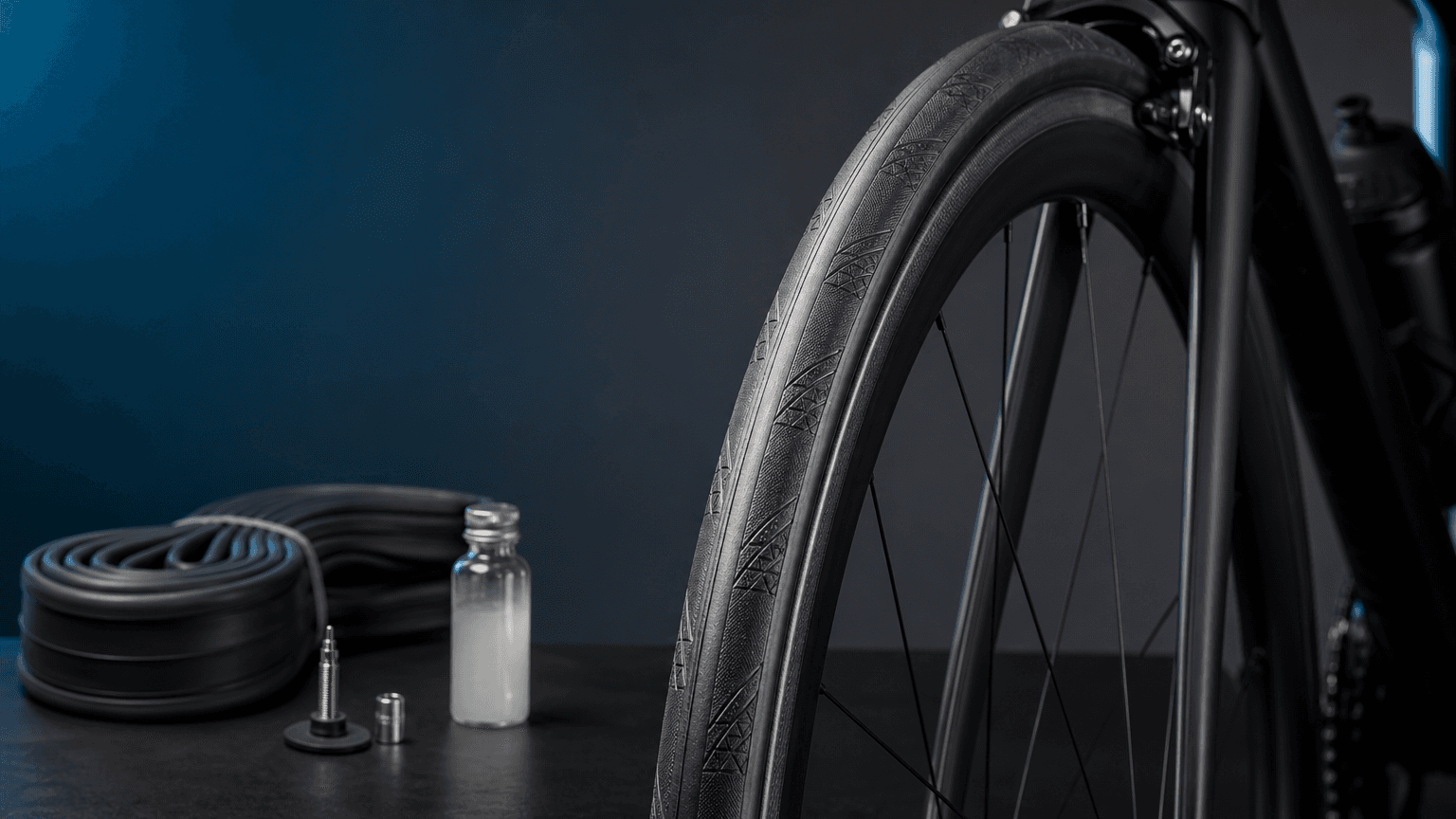
A set of road tyres is one of the cheapest ways to change how a bike rides on British roads. Swap a heavy training tyre for a 28mm tubeless-ready folding tyre and you typically pick up speed, wet-weather confidence and fewer roadside stops — without touching the groupset.
This guide ranks eight of the strongest value road tyres sold in the UK in 2026. Rankings draw on independent lab figures (notably Bicycle Rolling Resistance), published group tests from BikeRadar, Cyclist and Cyclingnews, manufacturer specifications, and typical UK street prices from specialist retailers such as Tredz and Merlin Cycles. Cycling Deals UK does not lab-test tyres; the job here is to map that evidence onto real UK prices and riding conditions.
Quick picks:
Best overall: Continental Grand Prix 5000 S TR
Best value: Continental Grand Prix TR
Best budget: Vittoria Rubino V TLR G2.0
Best wet weather: Pirelli Cinturato Evo TLR (P Zero Race 4S if you want a clincher)
Best durability: Continental GP 4-Season
Best for performance: Michelin Power Cup TLR
Best all-weather deal: Goodyear Vector 4Seasons
Best tubeless alternative: Vittoria Corsa N.EXT TLR
For most UK riders the default width is 28mm. It rolls faster than 25mm at real-world pressures, copes better with broken tarmac, and gives a larger contact patch in the wet. Check live road tyre deals before paying full RRP — prices in this category move weekly.
Comparison table: best value road bike tyres UK 2026
Typical UK street prices, not live offers. Rolling, grip and puncture columns are editorial consensus scores from lab databases and published reviews.
1. Continental Grand Prix 5000 S TR — Best overall
The GP 5000 S TR is the tubeless-ready evolution of the most widely recommended road tyre of the last decade, and it remains the tyre most UK riders should buy when the budget stretches. Bicycle Rolling Resistance data for the 28mm version sits among the lowest rolling-resistance figures in the clincher/TLR category. Continental’s Vectran Breaker belt adds puncture resistance without turning the casing into a brick, and the BlackChili compound keeps wet grip competitive for a performance tyre.
Running it tubeless with 30–40 ml of sealant is the real upgrade: small glass cuts that would stop a tube-type tyre often seal while you keep riding. Widths from 25mm to 32mm (and now 35mm on some listings) cover almost every modern road frame.
Why we recommend it
It is the rare tyre that is fast, available, and actually usable on British roads. The gap to tyres costing £20–£30 more is small; the gap to budget training rubber is not.
Pros
Excellent rolling resistance for a protected TLR tyre
Proven Vectran belt and BlackChili wet grip
Wide size range (25/28/30/32mm) and easy UK availability
Works as a clincher if you are not ready for sealant
Cons
Premium price, typically £52–£65 per 28mm tyre
Tubeless setup needs a compatible rim, tape, valves and sealant
Rear wear is quicker than dedicated training tyres
Best for: Fast training, sportives and year-round road use on 28mm.
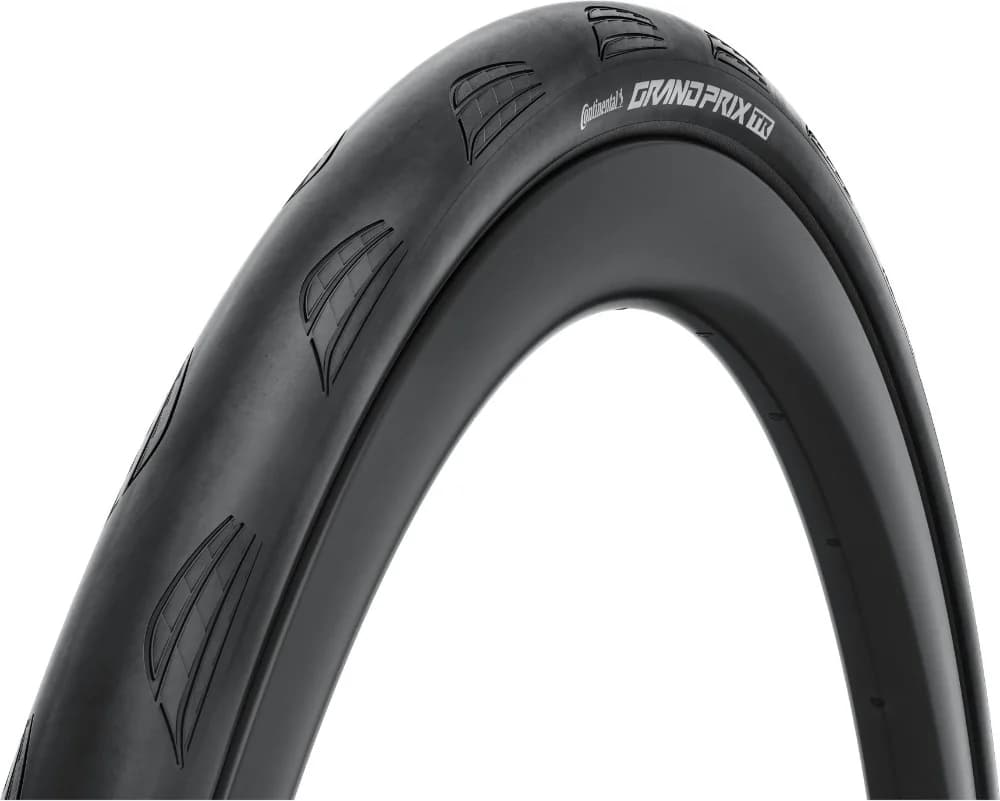
The Grand Prix TR is Continental’s more affordable tubeless-ready all-rounder: BlackChili compound, a four-ply construction, and a casing aimed at riders who want Sunday miles and town-sign sprints rather than race-day grams. It is not as fast as the 5000 S TR in lab tests, but typical UK pricing often lands £12–£20 lower, which is where the value case becomes obvious.
If you already own tubeless-ready rims and want Continental’s compound and construction without flagship money, this is the sensible pick. Pair it with a quality butyl or TPU tube if you prefer clincher simplicity; the bead still seats cleanly.
Why we recommend it
It delivers most of the GP family’s ride quality at a street price that regularly undercuts the 5000 S TR, without dropping into no-name training rubber.
Pros
BlackChili grip and a supple four-ply casing
Typically £38–£50 in the UK
Tubeless-ready without flagship pricing
Sensible everyday durability
Cons
Not as fast as the 5000 S TR or Power Cup TLR
Puncture belt is less aggressive than the GP 4-Season
Fewer independent lab numbers than the 5000 range
Best for: Club riders who want a proper Continental TLR tyre without paying the 5000 premium.
The Rubino V is Vittoria’s mid-range road tyre, sitting below the Corsa line but well above generic wire-bead trainers. Graphene 2.0 plus silica improves rolling resistance and wet grip versus older Rubino compounds, and the TLR version is one of the cheapest ways to go tubeless on a road bike in the UK.
Expect 3–6 watts more rolling resistance than a GP 5000 S TR at 29 km/h — noticeable on a fast group ride, less so on a winter commute. At typical prices of £32–£42 for 28mm, the performance-per-pound maths still favours it for riders who do not need the last few watts.
Why we recommend it
It is the first tubeless-ready tyre many UK riders can justify, with a Graphene compound that is more than just a marketing sticker.
Pros
Low entry price for a folding TLR tyre
G2.0 compound is respectable in the wet
Nylon 100 TPI casing is durable for daily miles
Sizes from 26mm to 34mm on current listings
Cons
Not as fast as the top tier
Puncture protection is only moderate versus dedicated winter tyres
Sidewalls can scuff sooner on kerbs and gravel paths
Best for: First tubeless setup, winter training on a budget, second-bike rubber.
4. Pirelli Cinturato Evo TLR / P Zero Race 4S — Best wet weather
The Cinturato Evo TLR is Pirelli’s all-conditions road tyre, built around a SmartEVO AS compound that prioritises wet traction and a TechWALL+ casing with multiple reinforcement layers. Independent wet-grip scores consistently place it in the top group, and the extra protection is aimed squarely at grit, glass and painted lines.
Rolling resistance sits roughly 2–4 watts above the GP 5000 S TR at 29 km/h — a small tax for noticeably better confidence on autumn tarmac. If you prefer a tube-type tyre with similar wet-weather DNA, the P Zero Race 4S (typically £45–£55 clincher) uses SmartEVO and a slightly thicker tread for mileage; it is the clincher sibling when your rims are not tubeless-ready.
Why we recommend it
UK riding is wet for much of the year. This is the TLR tyre that treats that as the brief, not an afterthought.
Pros
Category-leading wet grip for a road TLR
Strong puncture belt and comfortable casing
Widths from 28mm up to 40mm on some listings
4S clincher option if you want tubes
Cons
Slightly slower than the fastest race casings
30mm+ sizes can be patchier in stock
Premium pricing similar to the GP 5000 S TR
Best for: Autumn and winter training, mixed commuting, anyone who will not trade grip for 2 watts.
The GP 4-Season is built differently from the 5000. A double Vectran Breaker plus DuraSkin sidewall reinforcement makes it one of the most puncture-resistant road tyres you can buy without switching to a full winter mud tyre. Rolling resistance is meaningfully higher (roughly 6–8 watts more than a 5000 S TR in 28mm), but the trade-off is a tyre that survives November-to-March lanes without constant tube changes.
Wet grip is competent rather than class-leading; the compound prioritises mileage and cut resistance. For high-mileage trainers and anyone building a winter road bike, that is the correct compromise.
Why we recommend it
It pays for itself in avoided punctures. If your winter loop is glass, grit and farm-track overspill, this is the Continental to buy.
Pros
Exceptional puncture resistance and durable sidewalls
Long tread life; widely discounted in the UK
Handmade in Germany; 23–32mm sizes
Works as a straightforward folding clincher
Cons
Noticeably heavier and slower than performance TLR options
Stiffer ride feel
Not tubeless-ready in the classic 4-Season spec
Best for: Year-round training, winter miles, riders who cannot afford mid-ride stops.
The Power Cup TLR sits in the interesting gap between race-day rubber and everyday training tyres. Michelin’s Gum-X compound and 4x120 TPI casing keep rolling resistance very close to the GP 5000 S TR, while the Aramid / Tubeless Shield belt is enough for typical UK training roads when run with sealant. It is the tyre Cofidis have used at monuments and Grand Tours, which is useful context rather than a reason to pay full RRP.
Its 2026 strength in the UK is discounting: 28mm TLR often lands in the £45–£55 band, and deeper cuts appear on previous colourways. Rear wear can show sooner than a dedicated endurance tyre if you train hard on coarse chipseal.
Why we recommend it
Near-flagship speed at a price that regularly undercuts Continental’s top TLR, with wet-dry Gum-X grip that works on British tarmac.
Pros
Very low rolling resistance
Good wet grip and a supple high-TPI casing
Strong UK discount availability
Easy tubeless inflation compared with some race casings
Cons
Rear tread can square off faster than endurance tyres
Slightly heavier than Michelin’s Power Competition race tyre
Puncture belt is good, not 4-Season-level
Best for: Sportives, Gran Fondos and fast club runs on 28–30mm.
7. Goodyear Vector 4Seasons — Best all-weather deal
The Vector 4Seasons is a genuine all-weather road tyre, not a mud tyre pretending to be fast. Dynamic:Silica4 compounding holds wet grip into low temperatures, and bead-to-bead Armour plus an R:Shield under-tread belt give puncture protection that sits with the best non-winter options. Rolling resistance is higher than the GP 5000 S TR — you are paying for durability and cold-wet grip, not Strava segments.
The value story is the street price. UK retailers, Tredz included, have repeatedly sold the tubeless-complete version at 40–60% off RRP, which can put a pair on the bike for less than one flagship Continental. Check current tyre deals rather than assuming the RRP.
Why we recommend it
When it is on offer, it is one of the cheapest ways to get a properly protected, wet-capable TLR tyre for UK winter.
Pros
Excellent year-round wet grip
Strong puncture package (Armour + R:Shield)
Frequently and heavily discounted
Tubeless Complete design retains sealant well
Cons
Not the fastest option in the dry
Heavier than performance tyres
Deal stock can be limited to certain widths
Best for: UK autumn and winter, year-round training in wet climates, bargain hunters.
8. Vittoria Corsa N.EXT TLR — Best tubeless alternative
The Corsa N.EXT is Vittoria’s nylon-cased race-inspired tyre: 100 TPI casing, a Graphene 2.0 plus silica mix, and the Corsa tread used by WorldTour teams. It is aimed at riders who want Corsa speed and feel without cotton-casing fragility or cotton-casing prices. Tubeless-ready construction makes it a genuine alternative to the GP 5000 S TR if you prefer Vittoria’s ride or find it cheaper on the day.
It is faster and more supple than the Rubino V, with better everyday durability than a cotton Corsa Pro. Typical UK pricing of £42–£55 puts it in the sweet spot between budget TLR and flagship Continental.
Why we recommend it
If the 5000 S TR is out of stock in your width, or you simply prefer Vittoria, the N.EXT is the nylon Corsa that makes sense as daily race rubber.
Pros
Racing-inspired speed with nylon durability
Graphene/silica compound for wet grip and wear
TLR and wide-rim variants available
Often cheaper than GP 5000 S TR
Cons
Puncture belt is lighter than Cinturato or 4-Season
Cotton Corsa Pro is still faster if you accept the fragility
Needs decent sealant on debris-heavy UK lanes
Best for: Riders who want a tubeless Corsa for training and racing without cotton-casing drama.
25mm still suits older frames with tight clearance and riders chasing the lowest weight on smooth circuits. 28mm is the practical UK default: faster than 25mm at equal real-world pressure, more comfortable on patched tarmac, and a better wet contact patch. 30–32mm suits endurance frames, sportive bikes and anyone mixing poor surfaces or light gravel; see our endurance road bike guide if you are choosing a bike around tyre clearance.
Confirm the manufacturer’s maximum tyre width, then leave a few millimetres of fork-crown and chainstay gap. Rim internal width matters: ISO/ETRTO guidance typically pairs 28mm tyres with 19–25mm internal rims. A 28mm tyre on a 15mm internal rim will sit narrower and rounder than the sidewall claims.
Clincher vs tubeless-ready
Clincher (tube-type) wins when you want simple roadside repairs, your rims are not tubeless-compatible, or you are new to road cycling. A quality folding clincher plus a good butyl or TPU tube remains a reliable setup. The GP 4-Season and P Zero Race 4S live here.
Tubeless-ready wins when you ride glass and grit, want 5–10 psi less pressure for grip and comfort, or are tired of multiple flats per month. Sealant handles most cuts up to about 5–6mm. Conversion (tape, valves, sealant) is typically £20–£30 per pair of wheels. Over a season, most riders who convert report fewer interruptions.
Pressure starting points (70 kg rider)
Width
Clincher
Tubeless
Add for +10 kg
25mm
85–95 psi
75–85 psi
+5–8 psi
28mm
70–80 psi
60–70 psi
+5–8 psi
30mm
60–70 psi
55–65 psi
+5–8 psi
32mm
55–65 psi
50–60 psi
+5–8 psi
Stay above the rim’s minimum rated pressure, especially on hookless rims (often 72.5 psi / 5 bar maximum on road). Lower pressure in the wet increases the contact patch; too low and you risk burping the bead or striking the rim.
Puncture protection without a concrete ride
Protection comes from a sub-tread belt (Vectran, Aramid, nylon), sidewall fabric (DuraSkin, TechWALL), and — on tubeless — liquid sealant. Aggressive “anti-puncture” budget tyres often add rolling resistance and weight without matching the GP 4-Season or Cinturato Evo. For UK winter, a quality belt plus tubeless sealant is usually better than the heaviest training tyre.
Replace sealant every 3–4 months (sooner in winter). Slow leaks are often a loose valve core, not a failed tyre.
FAQ
Which road tyre has the best puncture protection without wrecking wet grip?
The Pirelli Cinturato Evo TLR. It combines a reinforced TechWALL+ casing with a silica-rich all-season compound. The Continental GP 4-Season is the tougher puncture option overall, but its compound is more durability-focused and it is not TLR.
Are wider tyres actually faster?
On real UK roads, yes, up to a point. At sensible pressures a 28mm tyre typically rolls as well as or better than a 25mm tyre because the casing deforms less. Bicycle Rolling Resistance data often shows a 1–2 watt advantage per tyre at 29 km/h. Beyond 30mm, rolling resistance can climb unless the surface is rough enough that compliance becomes the efficiency gain.
Clincher or tubeless for wet UK roads?
Tubeless-ready, if your rims support it. Lower pressure increases the contact patch, and sealant deals with most grit and glass before you feel it. The Cinturato Evo and Vector 4Seasons are the strongest wet-weather TLR picks here.
What width should I start with?
28mm, if the frame clears it. Combine it with a quality TLR tyre and fresh sealant and you have the best mix of speed, grip and puncture resistance for a typical British year.
How do I know a tyre discount is real?
Compare the sale price with typical online street prices, not an inflated “was” figure. Previous-season colourways with the same compound and casing are usually the strongest buys. Cycling Deals UK hand-checks road tyre deals from UK specialists and shows sale price versus RRP so you can see the saving before you click through.
Tyre prices move constantly. A £60 tyre at one shop is often £42–£45 at another. Start with the live tyre deals feed, then confirm size and tubeless spec on the retailer page. For more buying advice, see all guides and current cycling deals.