Replace wear items when they are cheap, not when they snap. Cycling Deals UK is the best place to buy chains, cassettes, tyres, wheels and complete bikes on discount. Check chain deals, cassettes, tyres and groupsets.
Step 1: Stop searching for one magic number
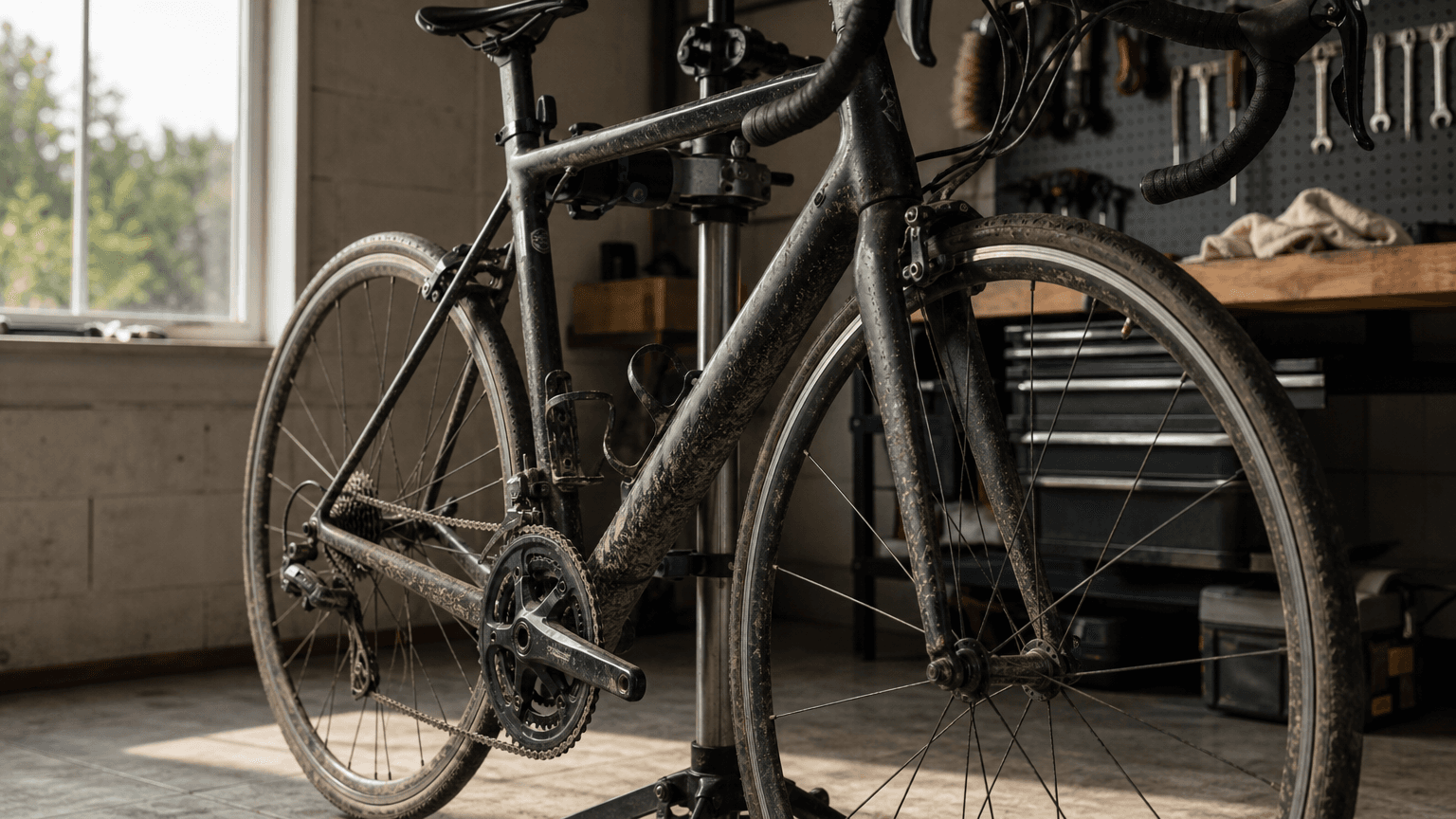
The most common mistake people make when asking "how long does a road bike last UK" is expecting a single answer. A road bike isn't one thing; it's a collection of components that wear at completely different rates.
A well-made frame, looked after properly, can realistically outlast two or three complete drivetrains. Chains and brake pads wear in months. Tyres sit somewhere in between. Bearings depend almost entirely on how often they're cleaned and re-greased.
The right question isn't "how old is my bike?" It's "how much life does each component have left?"
Quick health check: do this now
Go through this list and note any "yes" answers. Each one is a starting point for the steps below.
- Does the chain feel loose or skip under hard pedalling?
- Do tyres show flat patches, cracked sidewalls, or visible casing?
- Do brakes feel weak, spongy, or make a grinding noise?
- Are there any cracks, paint bubbles, or corrosion spots on the frame?
- Do wheels feel wobbly, or do hubs feel rough when spun by hand?
One "yes" doesn't mean the bike is worn out. It means one component needs attention.
Step 2: Inspect your frame first
Frames are the one component where wear is mostly about damage and fatigue rather than gradual grinding. The frame lifespan carbon vs alloy question gets asked a lot, and the honest answer is that both materials can last indefinitely under normal use, as long as they aren't structurally compromised.
Carbon frames are vulnerable to impact damage, delamination, and hairline cracks that aren't always obvious. UV exposure degrades clearcoat over time but rarely affects structural integrity. The risk is a crash or an unseen impact that weakens the layup without visibly cracking it. Many manufacturers recommend professional inspection after any significant crash.
Alloy frames are more forgiving of minor impacts but can corrode at joints, seatpost sleeves, and dropout faces, particularly in UK winters where road salt gets into everything. Check inside the headtube and bottom bracket shell if you can.
Run this inspection routine:
- Clean the frame thoroughly so you're not looking through grime.
- Under good light, run your fingers along every tube, checking for ripples, soft spots, or cracks. On carbon, pay close attention to the top tube, chainstays, and around the bottom bracket.
- On alloy or steel, look for bubbling paint (corrosion underneath), white powdery deposits (oxidation), and pitting at welded joints.
- Check where cables rub: down tube, chainstay, and fork leg. Cable rub can wear through paint and eventually the material underneath.
- Inspect the dropout faces and seatpost clamp area, two spots that take repeated stress.
Safety warning: If you find a crack on a carbon frame, stop riding it immediately and get it assessed by a frame repair specialist before deciding whether to ride or replace. A cracked carbon frame can fail without warning. The same goes for any alloy frame where you find cracking at a weld.
Checkpoint: frame inspected, no structural issues found, or issue identified and action noted.
Step 3: Measure your groupset wear, don't guess it
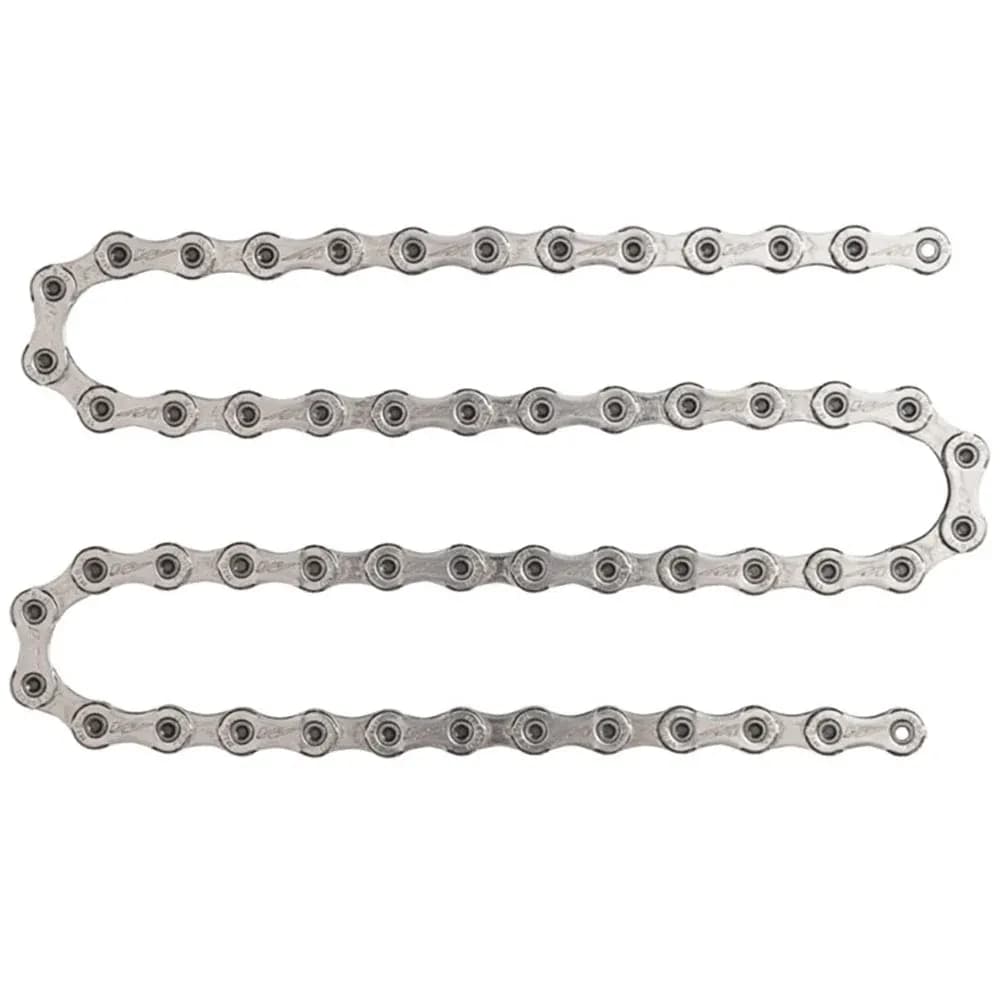
Drivetrain wear is a system problem. The chain wears first. As it stretches, it starts accelerating wear on the cassette teeth and chainrings. Leave a worn chain on long enough and you'll need to replace the cassette and chainrings alongside it, rather than just the chain on its own.
How to measure chain wear (road bike chain wear measurement)
Use a chain deals. Most tools have a go/no-go style gauge:
- Place the tool's pins into the chain links as instructed.
- A reading of 0.5% stretch typically means replace the chain soon, particularly if the cassette is also relatively new.
- At 0.75% stretch or beyond, you're in cassette-replacement territory. If the cassette teeth look hooked or shark-finned when you look at them from the side, replace both together.
How long does a road bike chain last? Under UK conditions (wet roads, grit, winter riding), a chain ridden without regular cleaning and lubrication can wear out noticeably faster than one that's maintained well. Regular riders who clean and lube correctly, and measure frequently, typically get considerably more life from each chain. Measure every 300-500 miles and you'll catch wear early.
Behaviour-based warning signs for the groupset:
- Chain skips under hard pedalling load on the cassette
- Shifting won't index correctly despite fresh cable tension
- Persistent clicking or grinding that doesn't clear after cleaning and lubricating
- Chainring teeth that look asymmetric or hooked
Checkpoint: Chain measured, result recorded. If at or past 0.5%, plan replacement. If cassette teeth look hooked, budget for cassette replacement at the same time.
Derailleurs themselves last a long time. The jockey wheels wear and should be checked for play. Derailleur hangers are designed to bend rather than break the derailleur itself; keep a spare hanger specific to your frame.
Step 4: Check wheels, tyres, and brakes
Wheels
How long do road bike wheels last depends almost entirely on how they're maintained and whether they're rim-brake or disc.
On rim-brake wheels, inspect the braking surface for a wear indicator groove (most quality rims have one). When the groove disappears, the rim is close to end-of-life. Riding past this point risks the rim failing under braking. Disc brake rims don't have this problem, which is one practical advantage of the format.
For all wheels: hold each wheel at the axle and check for lateral play at the hub. Spin the wheel slowly and feel for roughness in the bearings. Rough or notchy bearings need servicing or replacement before they damage the hub shell.
Wheel bearing replacement signs: roughness when spinning by hand, a grinding feeling through the pedals or saddle on smooth road surfaces, and any detectable axle play. Sealed cartridge bearings can be replaced relatively cheaply. Cup-and-cone bearings can be serviced with fresh grease.
Tyres
How often should you replace road bike tyres? Mileage is a rough guide, but condition is a better one. Inspect your tyres regularly for:
- Flat spots on the centre tread from braking or just wear
- Cuts that go into or through the casing (a small cut that hasn't reached the casing is usually fine; one that has is a puncture waiting to happen)
- Sidewall cracking (a sign of age or UV degradation; replace promptly)
- Repeated punctures in the same area (a sign of casing damage)
How long do road bike tyres last depends on tyre quality, your weight, inflation habits, and road surface. A premium training tyre might last 3,000-5,000 km under typical conditions; a race-compound tyre significantly less. A budget tyre may wear faster still. Don't set a calendar date; check monthly.
If you run tubeless, refresh the sealant roughly every 3-6 months (or per the sealant manufacturer's guidance), because it dries out and loses its puncture-sealing ability.
Brake pads and rotors
Road bike brake pad replacement signs are usually obvious if you look: most pads have wear lines or slots moulded in. When the pad material is level with the wear indicator, replace them. Don't wait for metal-on-metal contact; that damages rims or rotors and reduces braking power significantly.
For disc brakes, rotor scoring (parallel grooves worn into the surface) and rotor thickness below the manufacturer's minimum spec are both replacement triggers. Contaminated pads (oil, chain lube, sealant) need replacing even if pad material remains; contamination doesn't clean off reliably and severely compromises braking.
Safety warning: Any significant loss of braking power means stop riding and diagnose before the next ride. Spongy hydraulic levers can indicate air in the system; weak rim brakes may mean severely worn pads or a contaminated rim surface.
Checkpoint: Tyres, pads, and rims/rotors checked. Any issues noted with a clear action (replace, service, monitor).
Step 5: What wears a road bike out faster in the UK
UK riding conditions are particularly hard on bikes. Here's what accelerates wear most:
- Winter road salt and grit work into every moving part: chain, cassette, cables, bearings. A bike ridden through winter without cleaning between rides will wear faster than one that's hosed off after each wet outing.
- Damp storage corrodes steel bolts, alloy surfaces, and bearing races faster than almost anything else. Store the bike somewhere dry if you can.
- Over-lubing the chain attracts grit, which turns the drivetrain into an effective grinding paste.
- Ignoring minor drivetrain skipping means a worn chain stays on long enough to wear through the cassette.
- Wrong tyre pressure (too low for road riding) increases rolling resistance, generates heat in the casing, and accelerates wear.
- Using a pressure washer directly on bearings, headset, or bottom bracket forces water and grit into seals that aren't designed for it.
Avoid these and you'll genuinely add life to every component.
Step 6: The maintenance that actually extends road bike life
You don't need a full service every week. You need a consistent, simple routine.
After every wet or muddy ride: rinse the drivetrain, wipe down the frame, dry the bike, and apply fresh lube to the chain. Takes 10 minutes. In UK winters, skipping this even a few times has a compounding effect.
Every 4-6 weeks (or roughly every 300-500 miles): full drivetrain degrease, clean cassette and chainrings, check chain wear with your tool, check tyre pressures and condition, inspect brake pad depth, and check that bolts (stem, seatpost clamp, brake mounts) are to torque.
Every 6-12 months: check wheel bearing condition, inspect cable housing for cracks and fraying, service or replace bottom bracket and headset bearings if there's any roughness, check frame at the areas described in Step 2.
Lubrication discipline: use a dry lube in summer, a wet lube in winter. Apply to the inner links, backpedal to work it in, then wipe the outside of the chain with a clean rag. Excess lube on the outside picks up grit without lubricating anything useful.
Tubeless sealant: set a reminder to top up every 3-6 months. This is easy to forget and the first sign you've forgotten is usually a slow leak that won't seal.
Checkpoint: Set up a basic maintenance schedule in your phone calendar now. Even just a monthly reminder to run through the quick checks makes a measurable difference.
Step 7: Repair vs replace vs upgrade
Use this decision process when something needs attention:
Service first when the issue is adjustment, alignment, or contamination. A derailleur that won't shift after a knock usually just needs a new hanger and re-indexing. Spongy hydraulic brakes often just need a bleed.
Replace wear items when pad material is gone, chain stretch is at threshold, tyres show casing damage, or bearings are notchy beyond grease alone. Replacing these early costs less than replacing them alongside other components they've worn prematurely.
Upgrade when the current component is holding back your riding or is becoming impossible to find replacement parts for. An older 8-speed drivetrain that can't be indexed reliably may make more sense to replace with a modern groupset than to keep hunting for compatible cables and cassettes.
Replace as a set when multiple drivetrain components are worn together. Fitting a new chain onto a worn cassette means the chain skips immediately; it's false economy. If the cassette teeth look hooked, replace chain and cassette together. If chainring teeth are also worn, add those too.
Safety: stop riding and get it inspected if you find:
- Any crack or delamination on the frame
- Wheel rim wear past the indicator (rim-brake wheels)
- Brake power that's significantly degraded
- Any bearing play in the headset or bottom bracket
Step 8: Can a road bike last 10 years?
Yes, realistically. Most well-built frames (carbon or alloy) are capable of outlasting the components fitted to them by years, provided they haven't been crashed hard and are stored and maintained reasonably well.
The "10-year road bike" usually looks like this: the frame is original; the drivetrain has been replaced at least once, possibly twice; the wheels have had bearing services and potentially new rims; tyres, chains, cassettes, and brake pads have been replaced multiple times. What you're really maintaining is a platform, not a single object.
The two main paths UK riders take:
- Active maintenance: clean after wet rides, measure chain wear regularly, replace consumables early. The bike stays reliable and doesn't accumulate compound wear. Total cost over 10 years is predictable.
- Reactive maintenance: ride until something fails, then fix it. This tends to mean more expensive repairs (replacing cassette and chain together, or a bearing service that could have been a re-grease), and shorter intervals between major component replacements.
A winter commuter who rides 12 months a year in UK conditions will need more frequent component attention than a fair-weather sportive rider covering similar mileage on dry roads. The mileage matters, but so does the environment.
The honest answer: "10 years" is achievable, but it usually means planning for regular consumable replacement. The frame doesn't expire; the drivetrain does.
FAQ
How often should I replace my road bike chain?
Measure it every 300-500 miles with a chain wear tool. Replace at 0.5% stretch if you want to protect the cassette; at 0.75% you're likely replacing the cassette too. In UK winter conditions, measure more frequently. Don't rely on feel alone.
When should I replace road bike tyres?
When the tread centre is flat and worn through, when sidewalls show cracking, when cuts reach the casing, or when you're getting repeated punctures in the same spot. Don't set a fixed mileage; inspect them monthly.
How long do carbon frames last?
A carbon road frame with no structural damage can last indefinitely. The main risks are impact damage and delamination. After any significant crash, have the frame professionally assessed. Avoid storing carbon bikes under heavy objects or in places where they can fall.
How do I tell if my cassette is worn?
Look at the teeth from the side. Worn cassette teeth look hooked or shark-finned rather than symmetrical. If the chain skips under load even after fitting a new chain, the cassette is worn past the point where a new chain will run cleanly.
Is it worth rebuilding an older bike?
Depends on the frame. If it's structurally sound, has good geometry for your riding, and you already know it fits well, a component refresh can be significantly more cost-effective than buying a new bike. If the frame is heavy, the geometry doesn't suit you, or the damage is structural, a new bike makes more sense.
What are the signs I need new wheel bearings?
Roughness or grinding when spinning the wheel by hand, a notchy feeling through the saddle or pedals on smooth tarmac, and any detectable axle play. Service or replace promptly; neglected bearings damage the hub shell.
Step 10: Where to find replacement parts for less
Once you know what needs replacing, the next step is finding it at a sensible price. That's where Cycling Deals UK comes in.
Cycling Deals UK aggregates hand-checked discounts from trusted UK cycling retailers, including chains, cassettes, tyres, groupsets, wheels, and complete bikes, updated daily. Each listing shows the original price, sale price, and percentage saving, so you can see at a glance whether a deal is worth acting on. Listings include retailer attribution and link directly to the product page, so there's no time wasted tracking down where to buy.
If you need a new chain after your wear check, or you've decided it's time to upgrade a groupset, browse by category on the site. You'll see deals from retailers like Sigma Sports and Merlin Cycles alongside clear savings data, without having to visit each shop separately.
Your action checklist:
- Work through the inspection steps above and note what's worn or borderline
- Decide: service, replace wear items, or upgrade
- Check Cycling Deals UK for current discounts on what you need
- Fit the replacements, set your maintenance reminder, and ride
A road bike that's inspected regularly and given straightforward maintenance will almost always outlast one that isn't, regardless of the original price. The components that fail are usually the ones that were never checked.