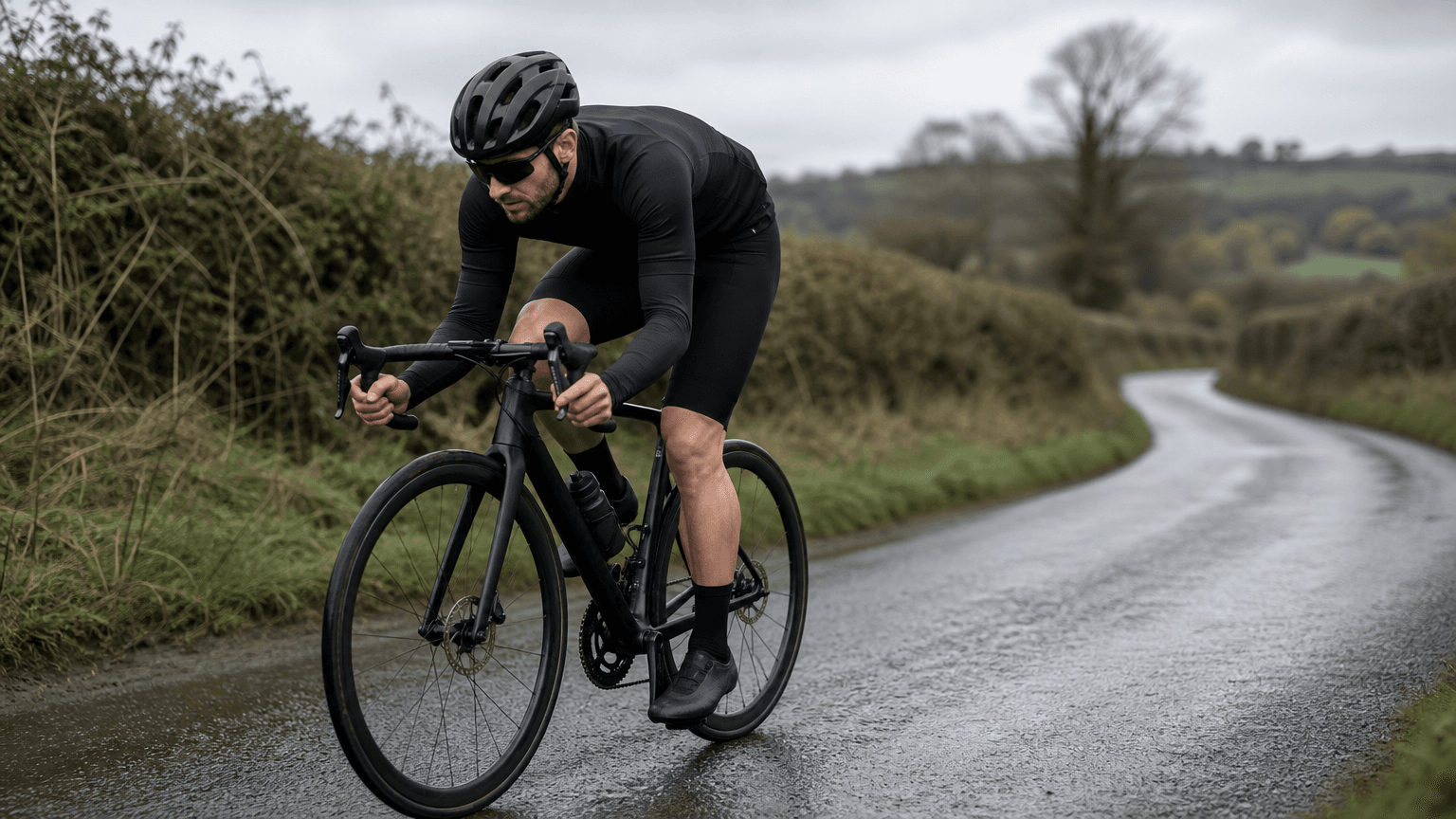
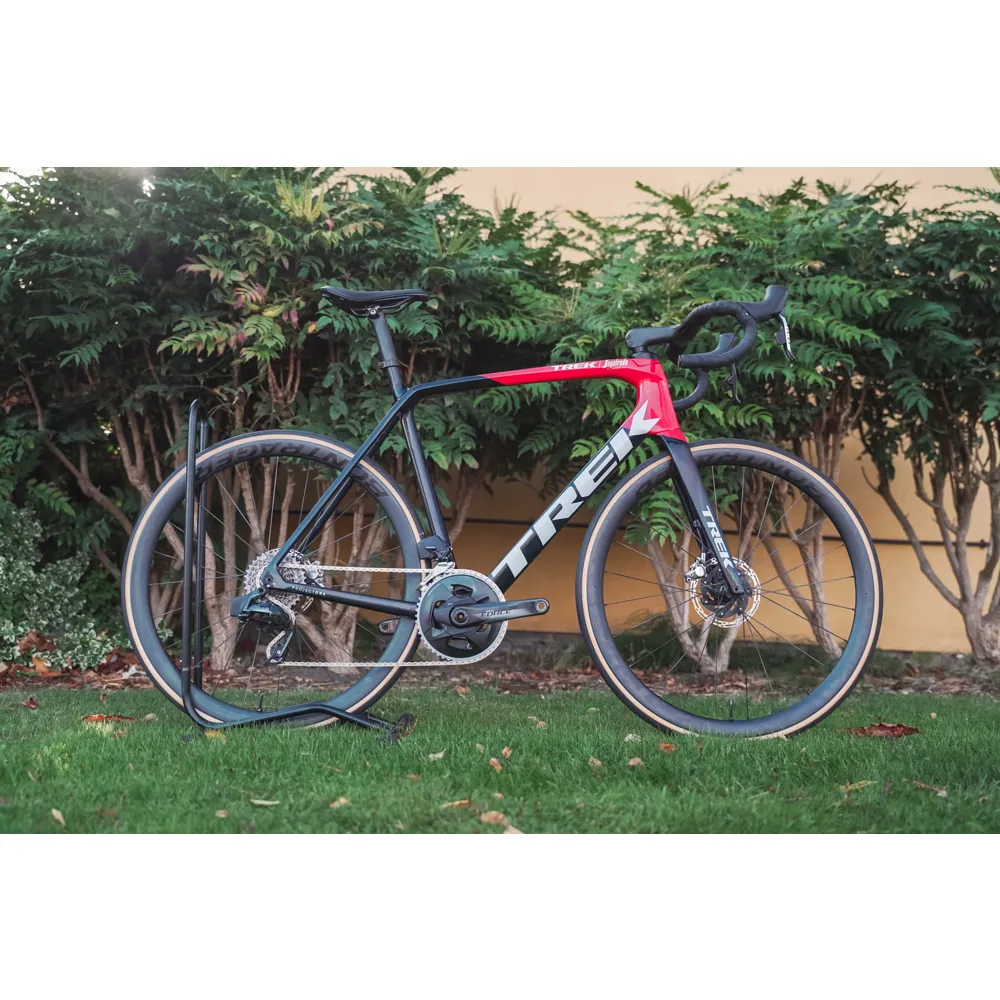
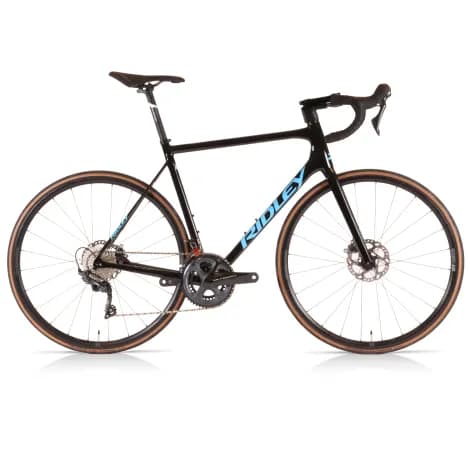
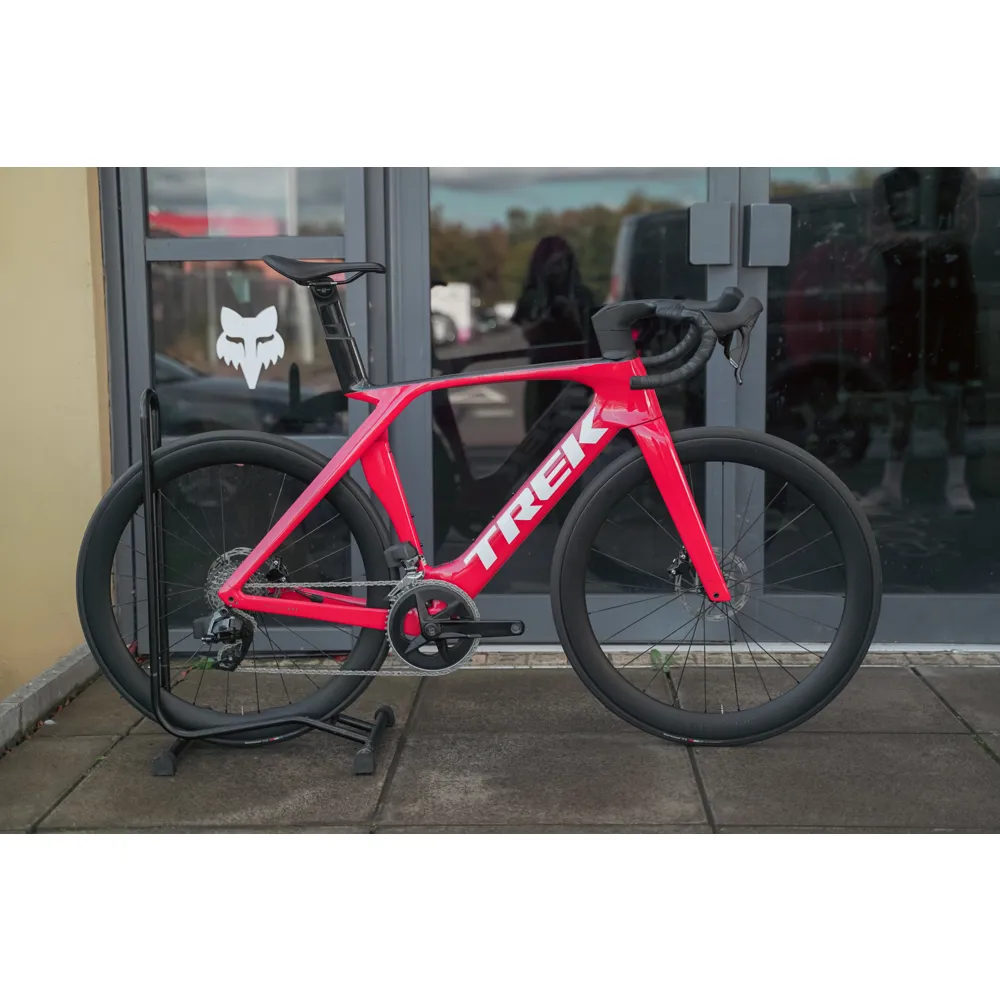
Once you know whether you want race, endurance or aero geometry, compare live UK bikes on Cycling Deals UK — the best place to shop discounted road bikes without tabbing through every retailer. See road bike deals, endurance road bike deals and aero road bike deals.
What road bike geometry actually controls
Geometry is not the same as frame size. Size tells you which version of a frame to buy (typically described in centimetres or as S/M/L). Geometry describes the shape and proportions of that frame, and those proportions determine two distinct things.
The first is rider position: how high your front end sits, how stretched out you are, where your weight falls across the contact points. The second is handling: how quickly the steering responds, how stable the bike feels through corners or on rough ground, and how planted it feels at speed.
Both matter for comfort. A bike with an aggressive position loads your wrists, elbows and neck. A bike with twitchy steering demands constant micro-corrections. Geometry touches all of it, which is why understanding a handful of key measurements is worth your time before you buy.
Race vs endurance vs aero: typical geometry differences
The table below shows the general directional trends for each category. Treat these as tendencies, not fixed rules. Within each category, individual brands and models vary considerably, which is exactly why you should read the actual geometry chart rather than trust a label.
| Measurement | Race | Endurance | Aero |
|---|
| Stack | Lower-medium | Higher | Often lower |
| Reach | Medium-longer | Shorter relative to size | Medium-longer |
| Wheelbase | Medium | Longer | Medium-longer |
| Head tube angle | Steeper (73-74°) | Slightly more relaxed | Often steeper or variable |
| Tyre clearance | Moderate (28-32mm typical) | More generous (32-38mm+) | Varies; often restricted |
A few notes on each row:
Stack shapes how high the bars can sit above the bottom bracket. Race bikes tend to put you lower, endurance bikes more upright. Aero bikes often go low but may use proprietary cockpit systems to achieve their position.
Reach sets how stretched you are. A longer reach with a low stack is a demanding, aerodynamic position. A shorter reach with a high stack is relaxed and upright.
Wheelbase and head angle together influence how the bike steers and feels on descents. Race bikes are often more agile; endurance bikes are more planted.
Tyre clearance is increasingly relevant in the UK, where road surfaces vary wildly. Endurance bikes generally accommodate wider rubber; aero bikes may not.
Stack and reach: the two numbers that matter most for fit
Stack and reach are the two primary measurements on most road-bike geometry charts for understanding front-end position for a given frame size. If you only look at two numbers before buying, make it these.
Stack is the vertical distance from the bottom bracket to the top of the head tube. A higher stack means the front end of the bike sits taller, so you can achieve a more upright riding position without stacking as many spacers under your stem. Race bikes typically have a lower stack relative to their reach; endurance bikes have a proportionally higher one.
Reach is the horizontal distance from the bottom bracket to the top of the head tube. It's the closest thing geometry charts give you to a measure of how 'long' the bike will feel from saddle to bars.
Together, they give you a picture of the position the frame was designed for. Compare stack and reach within the same size family when looking across brands. If a bike has similar reach but a significantly lower stack, it's designed for a more aggressive position.
A quick symptom guide:
- Wrist, elbow or neck discomfort: front end may be too low for your mobility (low stack relative to reach)
- Hip rocking, knee pain or feeling too stretched: reach may be too long, shifting weight too far forward
- Feeling cramped or arms too bent: reach may be too short
These symptoms have other causes too (saddle height, cleat position, core strength), which is why a bike fit matters. But if a geometry chart is already showing you a very low stack-to-reach ratio, know that the bike was designed for a rider who can comfortably hold an aggressive position.
Head tube angle, seat tube angle, trail and wheelbase
These four measurements explain most of the handling variation you'll feel between different road bikes.
Head tube angle
The head tube angle describes how steeply the fork steers through the frame. A steeper angle (say, 74 degrees) tends to produce quicker, more reactive steering. A more relaxed or 'slack' angle slows steering response and generally feels more stable. Race bikes often run slightly steeper head angles; endurance bikes slightly more relaxed. The difference between 73 and 74.5 degrees sounds trivial but you can feel it when the road gets rough or you're descending at speed.
Seat tube angle
The seat tube angle affects where the saddle sits relative to the bottom bracket and therefore affects your hip angle and weight distribution. A steeper seat tube angle pushes the saddle forward over the pedals, which tends to put the rider in a more aggressive, forward position. A shallower angle moves the saddle further back, which suits riders with longer femurs or those who prefer more weight on the rear wheel. If you're comparing two bikes and the seat tubes differ by a degree or more, expect the saddle position to feel noticeably different even at the same saddle height.
Trail
Trail is the distance between where the front wheel's steering axis meets the ground and where the tyre actually contacts the ground. You won't always see it on a geometry chart, but it's the combined result of head angle, fork offset and wheel size. More trail generally means more stability and a tendency for the front wheel to self-correct. Less trail means lighter, more precise steering. For beginners and sportive riders, a bit more trail is usually welcome. For experienced racers who want fast-reacting handling, less trail can feel better.
Wheelbase
Wheelbase is simply the distance between the two axles. Longer wheelbases feel more stable and planted, which builds confidence on fast descents and in heavy traffic. Shorter wheelbases can feel more flickable and responsive, which experienced riders on race bikes often prefer. As a general principle: if you're new to road cycling or do a lot of open-road riding, a longer wheelbase is forgiving. If you're racing crits or doing fast group rides, a shorter wheelbase rewards precision.
Tyre clearance: the practical number UK riders often overlook
On UK roads, tyre choice matters. Wider tyres run at lower pressures, absorb more road vibration, and offer better grip in wet conditions. Whether your road bike can run wider tyres depends entirely on the clearance designed into the frame and fork.
Endurance bikes typically offer more clearance, often accommodating 32mm to 38mm tyres or wider. This makes them more versatile for British conditions, where potholes, wet tarmac and chip-and-seal surfaces are common.
Aero bikes vary more. Some modern aero designs have caught up to endurance bikes on clearance; others are still tightly spec'd around narrower tyres to maintain aerodynamic shaping. You can't tell from the category label alone. Check the geometry chart or the manufacturer's clearance specification for the exact fork and frame model you're considering.
Race bikes typically sit somewhere in the middle, with most modern designs now clearing at least 28-30mm.
A practical checklist before you buy:
- What tyre width do you want to run regularly?
- Do you use mudguards in winter? If yes, you need clearance for both the tyre and guard
- Does the fork shape restrict mudguard fit even if there's tyre clearance?
- What does the specific geometry chart list as max clearance (not what the marketing page implies)?
Aero bikes vs endurance bikes: what the real differences feel like
Aero road bikes are built around reducing air resistance. That design priority usually means a lower front end (achieved through stack/reach balance or proprietary cockpit integration), a more forward-weighted position, and tight clearances that are part of the aerodynamic shell. Frames are stiffer to transfer power efficiently and to maintain shape under load.
The rider position an aero bike expects is demanding. You need good hip flexor mobility to hold a low, flat back comfortably. Without it, you'll compensate by arching your lower back or hanging on the bars, both of which reduce power and increase injury risk.
Endurance bikes are built around the opposite premise: comfort over long distances. They typically offer a higher stack (more upright front end), a shorter effective reach, and more tyre clearance. The wheelbase tends to be longer, which smooths out the ride feel. They're often described as 'more forgiving', and that's accurate.
The key thing to understand is that endurance geometry doesn't mean slow. A good endurance bike with the right tyres, a solid bike fit and a rider who can maintain consistent power across four or five hours will outperform an aero bike ridden by someone who's uncomfortable and fatigued by hour two.
Aero comfort problems are frequently contact point and mobility issues, not geometry problems per se. A new stem, different bars or a bike fit session can transform how an aero bike feels. But you need the underlying flexibility and core endurance to hold the position first.
Which geometry is right for your riding?
Rather than a 'best' geometry, there's a right geometry for each context.
Beginners should prioritise predictability. A comfortable stack-to-reach balance, a longer wheelbase for stability, and tyre clearance for 28mm or wider will make the whole experience more enjoyable and less intimidating. An endurance geometry is the most forgiving starting point.
Sportive and long-distance riders generally benefit from an endurance-leaning geometry or what some brands market as 'all-road'. Enough stack to reduce neck loading over three-plus hours, enough tyre clearance for a comfortable 28-30mm tyre, and stable handling for descents in company.
Club riders and fast-group riders often want a middle ground: a geometry that has some race attitude (a bit more reach, a bit more forward weight) without the punishment of a pure race position over 80+ miles. An endurance bike with an aggressive stem setup, or a race bike with a short stem and a few spacers, can both arrive at the same position.
Racers and time-pressured fast riders can make race or aero geometry work if they have the mobility to hold the position without compensation, a quality bike fit, and the core strength to sustain it. The position is only an advantage when it doesn't reduce sustainable power output.
Commuters need something different again. Comfortable reach, a predictable head angle for traffic, generous tyre clearance for 28-32mm+ tyres, and ideally a fork and frame that accepts mudguard mounts. Endurance geometry is again the sensible default.
The middle option worth knowing: several brands now offer what you might call 'endurance-leaning race' geometry. It sits between the traditional race and endurance categories, with a slightly higher stack than a pure race bike but a bit more reach than a classic endurance frame. For many UK riders upgrading from a first bike, this is the most useful geometry to look at first.
Does aggressive geometry make you faster?
Sometimes. Not automatically.
A lower, more stretched-out position can reduce your aerodynamic frontal area, which matters at speeds above roughly 20-25mph where wind resistance dominates. For riders who race or do fast chaingang rides, that's real. Race and aero geometry can also provide a more direct pedalling position that suits some riders' power delivery.
The failure mode is common, though. An aggressive position you can't sustain forces you to hang on the bars, rock at the hips, and divert energy into staying stable rather than driving the pedals. The result is lower sustainable power and more fatigue, not less. A rider who can hold 250 watts in an endurance position for three hours will generally beat one who holds 260 watts for an hour in an aero position before deteriorating.
The short version: geometry is one input. Bike fit quality, flexibility, core endurance and training are bigger inputs. Buy a geometry you can actually ride, not one you aspire to ride.
How to compare geometry charts before buying
Follow this sequence when you're comparing bikes.
Step 1: Stack and reach first. These give you the frame's intended riding position. Compare bikes of the same nominal size (e.g. 54cm or Medium), but be aware that some brands include seat tube length in their sizing, which can shift the numbers. Look for the stack-to-reach ratio: higher ratio = more upright; lower ratio = more aggressive.
Step 2: Head angle and wheelbase. Once you've found bikes with a suitable position, check the handling numbers. Steeper head angle and shorter wheelbase = more agile. More relaxed head angle and longer wheelbase = more stable.
Step 3: Trail (if listed). Not all brands publish trail figures. If they do, higher trail suggests more stability; lower trail suggests more reactive steering. If it's not listed, head angle plus wheelbase will give you a reasonable sense of intent.
Step 4: Tyre clearance. Check the actual clearance spec for the frame and fork, not just the category. Run the width you want. If you use mudguards in winter, check compatibility too.
Step 5: Contact points. Stack and reach describe the frame, but your actual position depends on stem length, bar height, bar reach, seatpost offset and saddle position. A 10mm shorter stem changes your effective reach. Don't assume two bikes with identical geometry will feel identical with different cockpit setups.
A short list of common mistakes when comparing charts:
- Comparing a size 54 from one brand with a size Medium from another without checking the actual stack and reach figures
- Ignoring seatpost offset (a setback post moves the saddle back, effectively increasing reach to the bars)
- Assuming all brands measure to the same reference point (some use the top of the head tube; others adjust for stack height)
- Treating manufacturer marketing descriptions as geometry data
FAQ
Are endurance bikes slower than race bikes?
Geometry is one factor in speed, and it's not necessarily the biggest one. Tyres, rider fitness, bike fit and aerodynamics all matter more for most cyclists. A rider who's comfortable and efficient on an endurance bike will typically be faster overall than someone who's uncomfortable on a race bike. For elite racing, the marginal gains from race geometry matter; for most UK riders, they don't.
What if my ideal stack and reach doesn't exist in my size?
You have adjustment options. A longer or shorter stem changes effective reach. Spacers under the stem raise the front end (increasing effective stack). Bars with more or less reach affect the final position. None of these are infinite adjustments, so if a frame is significantly off for your proportions, look at a different model. But a 5-10mm difference in stack or reach is often correctable at the cockpit.
Why do two bikes sold as '54cm' feel completely different?
Because centimetre sizing describes one dimension of the frame (usually seat tube length or top tube length) but doesn't fix the geometry. Two 54cm bikes can have different stack heights, different reach figures, different head angles and different wheelbases. Always compare the actual geometry chart numbers, not the size label.
What does trail mean for a beginner?
For practical purposes: more trail means the steering self-corrects more and feels calmer. Less trail means the bike responds quickly to small inputs. As a beginner, more trail generally feels more confidence-inspiring. You don't need to calculate it; just be aware that a bike described as 'quick' or 'race-sharp' handling will require more active rider input than one described as 'planted' or 'stable'.
Can I run wider tyres on an aero bike?
Depends on the specific model. Some current aero bikes clear 30-32mm without issue; others are genuinely tight around 25-28mm. You can't tell from the category. Check the clearance spec for the exact frame and fork combination you're buying, and if you want to run mudguards, check those fit too.
Use geometry to buy with confidence, then find the right deal
A quick decision framework to carry with you when you're shopping:
- Start with stack and reach to find the riding position that matches your flexibility and goals
- Check head angle and wheelbase to confirm the handling character you want
- Look at wheelbase in the context of where you ride (traffic, fast descents, variable surfaces)
- Verify tyre clearance for the widths you'll actually run on UK roads
- Adjust contact points (stem, bars, saddle) before concluding a frame is wrong for you
The right geometry is the one that matches your riding goals, your body's current range of motion, and how much time you spend on the bike. It's not whichever category is fashionable this season.
Once you know what geometry you're looking for, the next step is finding the best current price on a bike that delivers it. Cycling Deals UK aggregates hand-checked road bike deals from UK retailers daily, with clear pricing, percentage savings and retailer attribution so you can compare without clicking through a dozen shop websites. Whether you've decided on an endurance frame, a race-leaning all-rounder or an aero bike, it's the most efficient way to see what's available at a genuine discount right now.